- BMI becomes a first screen, not a diagnosis. A Lancet commission says excess fat should be confirmed with a waist measurement or body-fat scan, then classed as "clinical" (already affecting organs or daily life) or "preclinical"
- The biggest test so far, in Nature this week, covered 844,108 adults in four countries. BMI alone missed obesity-level body fat in up to 8.6% and wrongly labelled up to 3.1%
- The two groups carry different risks. In UK Biobank, clinical obesity was linked to a 56% higher risk of death and preclinical to 18%. Observational links, not proof
- The share called "clinical" swings widely, from about a quarter of people with obesity to more than 90%, depending on the data. That, plus treatment access, is the heart of the debate
- The practical step: measure your waist. NICE advises keeping it to less than half your height
For decades, obesity has been diagnosed with one number: body mass index, your weight in kilograms divided by your height in metres squared. It's crude: as the commission behind the new definition noted, BMI "does not differentiate between fat and lean mass or account for differences in body fat distribution". That commission proposed a replacement in January 2025, and since then several large studies have tested it on real populations, most recently in Nature this week. These labels describe health, not character or appearance. This isn't medical advice: talk to your doctor about your own health.
What the Commission Actually Proposed
Evidence: Expert consensus — not a trial resultThe Lancet Diabetes & Endocrinology Commission on Clinical Obesity, chaired by Francesco Rubino of King's College London, published its report on 14 January 2025. Its starting point: "Current BMI-based measures of obesity can both underestimate and overestimate adiposity and provide inadequate information about health at the individual level." The criteria have been endorsed by 76 organisations worldwide (Rubino, Lancet Diabetes Endocrinol 2025), among them the American Heart Association and The Obesity Society (Mass General Brigham).
Step one: confirm excess fat
Excess fat should be confirmed in one of these ways:
- BMI plus at least one body measurement: waist circumference, waist-to-hip ratio or waist-to-height ratio.
- At least two body measurements, whatever the BMI. This is how someone with a "normal" BMI can be diagnosed.
- Direct measurement of body fat, such as a DEXA scan or bioimpedance, where available.
- A BMI above 40, where excess fat "can pragmatically be assumed".
The Commission didn't fix one set of cut-offs. It asked for "age- gender- and ethnicity-appropriate cut-off points". Two of the studies below published the values they used (see Figure 3).
Step two: is the fat already causing illness?
Preclinical obesity is "a state of excess adiposity with preserved function of other tissues and organs." Clinical obesity is "a chronic, systemic illness" in which excess fat has changed how organs or tissues work, or substantially limits everyday activities. The Commission lists 18 adult criteria, including sleep apnoea; breathlessness; heart failure; atrial fibrillation; recurrent blood clots; raised blood pressure; high blood sugar with high triglycerides and low HDL cholesterol; fatty liver disease with scarring; reduced kidney function; urinary incontinence; polycystic ovary syndrome or, in men, low testosterone; chronic, severe knee or hip pain; leg lymphoedema; and significant age-adjusted limits on mobility or daily activities.
The treatment implications differ. The report says "Preclinical obesity does not generally require treatment with drugs or surgery," though people in this group "should receive science-based health counselling and have equitable access to care where needed," based on individual risk. For clinical obesity, the Commission said it "should not require the presence of other diseases to define indication for or coverage of treatment" (Rubino, Lancet Diabetes Endocrinol 2025).
What the New Studies Found
Evidence: Large observational studies — consistent on BMI, split on "clinical"The four-country study in Nature (November 2026)
This is the study behind this week's headlines, such as the Reuters report run by CTV, "Study suggests not all obesity means ill-health." Led by An Pan of Huazhong University of Science and Technology, with Rubino as senior author, it analysed 844,108 adults in four cohorts and databases: the Kailuan Study in China, UK Biobank, the US All of Us Research Program and Spain's SIDIAP database (Pan, Nature 2026). It found:
- BMI misclassified people both ways, missing obesity-level body fat in up to 8.6% and wrongly labelling up to 3.1%.
- Obesity rates rose by about 3.3 to 7.4 percentage points under the new criteria, depending on the population (ThePrint).
- Clinical obesity made up 23% to 31% of obesity cases, or 5.6% to 10.9% of all adults. In Reuters' summary, "Only between a quarter and a third of people currently diagnosed with obesity should be considered as in poor health" (CTV/Reuters).
- Most preclinical obesity stayed preclinical: 77% to 91% didn't progress over ten years.
- Risk of death: obesity was linked to higher mortality only when waist measurements were used alongside BMI. In models adjusted for sociodemographic factors, clinical obesity was linked to 69% higher all-cause mortality (hazard ratio 1.69, 95% CI 1.64–1.73), preclinical obesity to 19% (1.19, 1.14–1.24) (Pan, Nature 2026).
"Body mass index alone cannot tell us whether someone is already ill or at risk of illness," Rubino said (Euronews).
UK Biobank: the clearest mortality numbers
A JAMA Internal Medicine research letter from researchers at the University of Regensburg and the International Agency for Research on Cancer applied the criteria to 290,664 UK Biobank participants, with 16,917 deaths over a median of 13.7 years. It classed 48.6% as having no obesity, 36.4% preclinical obesity and 15.0% clinical obesity. Its cut-offs are in Figure 3 (Stein, JAMA Intern Med 2025).
Higher risk of death, by category
Stein, Freisling & Leitzmann, JAMA Internal Medicine 2025; 290,664 adults, 16,917 deaths, median follow-up 13.7 years. New-definition groups are compared with no obesity; BMI groups with normal weight. Hazard ratios; 95% CIs 1.14–1.23, 1.50–1.63 and 1.31–1.42. Observational.
"BMI may miss millions": the US national survey (June 2026)
A Keck Medicine of USC team led by hepatologist Brian Lee applied the criteria to 5,642 adults in the 2021–2023 US National Health and Nutrition Examination Survey (NHANES), published in Annals of Internal Medicine. About 26% of adults with a "normal" BMI met the criteria for clinical obesity, as did more than 50% of those with an "overweight" BMI (American College of Physicians).
The German study: "the vast majority" are clinical (February 2026)
A team from the German Institute of Human Nutrition Potsdam-Rehbruecke (DIfE) and the German Center for Diabetes Research (DZD), with partners including Harvard's Frank Hu, tested the definition in 5,265 US NHANES adults, Germany's EPIC-Potsdam cohort and the TULIP lifestyle programme, in Nature Communications. Among people with a BMI of 30 or more, 100% had excess fat confirmed by at least one other measure. Among those with confirmed obesity, 82.6% met clinical criteria in NHANES and 92.1% in EPIC-Potsdam. In the EPIC-Potsdam cohort, compared with people without obesity or clinical criteria, clinical obesity was linked to 2.78 times the risk of cardiovascular disease and 7.88 times the risk of type 2 diabetes. Preclinical obesity wasn't linked to higher cardiovascular risk, but was linked to 4.32 times the risk of diabetes (Schiborn, Nat Commun 2026; DZD).
Surgery candidates: same BMI, different health (August 2026)
The King's College London headline "New obesity definitions reveal ill health more accurately than body mass index" covered a JAMA Network Open study of 2,316 candidates for weight-loss surgery at centres in London, Lille, Barcelona and São Paulo. Of these, 73.8% had clinical obesity and 26.2% preclinical, from 62.7% clinical in Brazil to 79.3% in the UK, though BMI was similar between groups within each centre. In the French cohort, major complications within 30 days were more common with clinical obesity (4.0% vs 1.1%) (Cremona, JAMA Netw Open 2026; King's College London).
How many people would have obesity?
In the US All of Us programme (more than 300,000 people), a Mass General Brigham team found obesity prevalence rose from 42.9% by BMI to 68.6% under the new definition. About half of them had clinical obesity, and people who qualified on body measurements alone had higher risks of diabetes, cardiovascular disease and death than people without obesity (Mass General Brigham). A separate NHANES analysis of 14,414 adults put prevalence at 75.2%, against 39.9% by BMI, using a waist-to-height cut-off of 0.5 (Healio, on Al-Roub 2025).
How many people with obesity count as "clinical"?
Green: large population cohorts and databases. Gold: measured blood pressure and blood tests, or pre-surgical assessment. Grey: approximate, from the release. Sources: Pan, Nature 2026 (range across cohorts); Stein, JAMA Intern Med 2025 (43,484 of 149,440, our calculation); Fourman, JAMA Netw Open 2025; Cremona, JAMA Netw Open 2026; Schiborn, Nat Commun 2026. Populations differ; not directly comparable.
Why the Numbers Disagree
Evidence: Open questions — no outcome trials yet"Clinical" depends on how hard you look. The same definition labels about a quarter of people with obesity as ill in one dataset and more than nine in ten in another (Figure 2). Populations differ, but so does measurement. The German team, with measured blood pressure and blood tests, found most people with clinical obesity met several criteria at once, and questioned whether such a comprehensive diagnosis is needed (DZD). Of the Nature study, Spanish researcher Ana Belén Crujeiras noted that organ function "was not assessed using biochemical or molecular measures", which "may lead to an underestimation of the true clinical status" (Science Media Centre).
Cut-offs matter. In the 75.2% NHANES analysis, the authors said a 0.5 waist-to-height threshold may overestimate excess fat; at 0.6, prevalence fell to 58.4% (Healio). In 1,900 NHANES adults with DEXA scans, a team led by Aayush Visaria of Rutgers found BMI plus waist circumference matched DEXA-defined obesity slightly better than the full definition (area under the curve 0.818 vs 0.79). "The overarching message is that more complicated does not necessarily mean more accurate," Visaria said (Healio, on Visaria 2026).
Cause and effect. These are observational studies. Marie Spreckley, a weight-management researcher at the University of Cambridge, noted that the Nature study "does not establish that adopting this framework will improve patient outcomes" (Science Media Centre). And some of the mortality gap is built in, since organ problems define clinical obesity.
Treatment access cuts both ways. Spreckley warned that the distinction "must not become a barrier to preventive treatment." Diego Bellido, president of the Spanish Society for Obesity, warned of the "risk if a new diagnostic label automatically translates into a prescription," and said preclinical obesity "should not be interpreted as the absence of risk" (Science Media Centre). Live Science cited a 2025 analysis warning that some people now eligible for FDA-approved obesity medicines could be reclassified as preclinical (Live Science).
How to Measure Your Waist
Evidence: Official guidance (NICE)You don't need a scan. England's National Institute for Health and Care Excellence (NICE) recommends adults with a BMI below 35 use waist-to-height ratio as well as BMI, for both sexes and all ethnicities (NICE NG246). Its public advice is to "keep the size of your waist to less than half of your height" (NICE). NICE's method:
- Find the bottom of your ribs and the top of your hips.
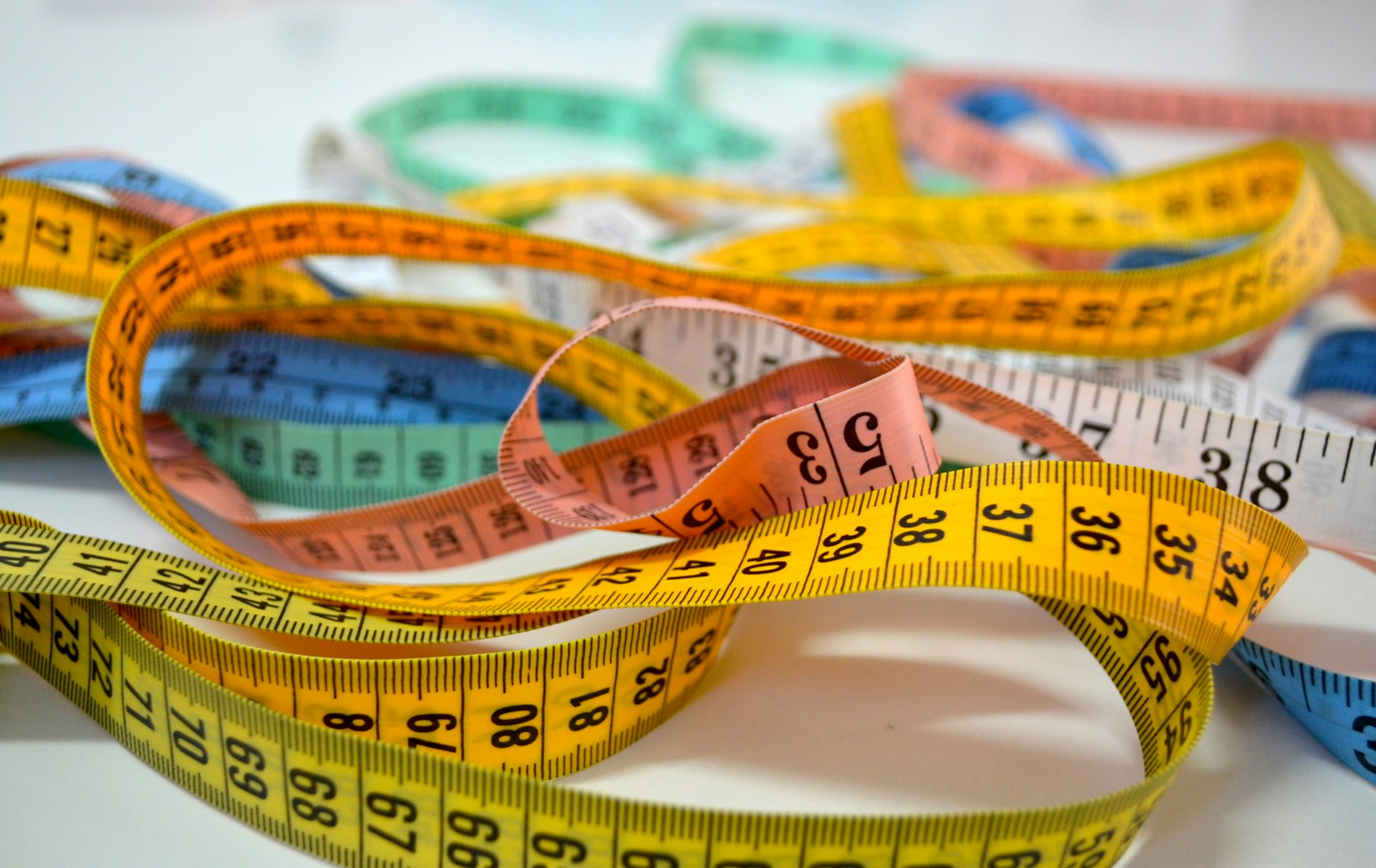
- Wrap a tape measure around your waist midway between these points, which "will be just above the belly button".
- Breathe out naturally before taking the measurement.
- Measure height in the same units, then divide waist by height.
For example, at 175 cm (about 5 ft 9 in) tall, a waist of 90 cm gives a ratio of about 0.51.
Cut-offs used in the new studies
| Measure | Men | Women |
|---|---|---|
| Waist-to-height ratio NICE: 0.4–0.49 healthy; 0.5–0.59 increased risk; 0.6+ high | 0.5 0.50 or more in UK Biobank; above 0.5 in the German-led study | 0.5 as for men |
| Waist circumference | 102 cm (40.2 in) 90 cm for Asian men in the German-led study | 88 cm (34.6 in) 80 cm for Asian women |
| Waist-to-hip ratio | above 0.90 | above 0.85 |
| Body fat on DEXA scan | above 25% | above 35% |
| BMI first screen; 27.5 for South Asian, Chinese, other Asian, Middle Eastern, Black African or African-Caribbean backgrounds (NICE); excess fat assumed above 40 | 30 or more | 30 or more |
Cut-offs as used by Schiborn et al., Nature Communications 2026, and (except DEXA and Asian waist values) Stein et al., JAMA Internal Medicine 2025. The Commission asks for age-, sex- and ethnicity-appropriate cut-offs, so these aren't universal. Bands and lower BMI thresholds: NICE NG246. Inches: our conversion.
Being above these lines doesn't mean you're ill. It's a reason to ask your doctor about the checks that separate preclinical from clinical obesity: blood pressure, blood sugar and lipids, liver and kidney tests, and symptoms such as joint pain.
Why Your Waist Matters for Longevity
The most useful finding is that the waist adds information BMI can't, as the Nature mortality results showed. Waist size is also a practical stand-in for visceral fat, the fat packed around the organs: in the Visaria study, BMI plus waist circumference picked out DEXA-measured visceral obesity better than the full Commission definition (0.785 vs 0.717). Our visceral fat guide covers what reduces it.
In EPIC-Potsdam, people without obesity who still met clinical criteria had 2.21 times the cardiovascular risk of people with neither, so organ health matters at any size. And the categories can move. In the TULIP nine-month lifestyle programme, among people with a BMI of 30 or more who lost more than 3% of their weight, the share with clinical obesity fell from 71% to 57% and prediabetes from 52% to 29%. Among those who lost less, clinical obesity barely moved (65% to 61%) (Schiborn 2026). On a GLP-1 medicine? See our guide to keeping muscle.
Frequently Asked Questions
BMI is a start. Your waist says more.
Confirming excess fat properly, then asking whether it's already harming health, is a sensible idea. The studies agree that BMI alone misclassifies a meaningful minority and that waist measures sharpen risk. They disagree on how many people are already ill, and nobody has shown the labels improve outcomes.
Measure your waist and divide it by your height. If it's half or more, it's a prompt to ask your doctor about blood pressure, blood tests and symptoms, not a verdict on you.
Sources
- Rubino F, et al. Definition and diagnostic criteria of clinical obesity. Lancet Diabetes & Endocrinology, Commission, published online 14 January 2025 (doi:10.1016/S2213-8587(24)00316-4). PubMed 39824205; full text (PMC). See also King's College London release, 15 January 2025.
- Pan A, et al.; Rubino F (senior author). Validation of clinical and preclinical obesity across global cohorts. Nature, published 11 November 2026 (doi:10.1038/s41586-026-11237-5). As reported by King's College London (EurekAlert!), Reuters via CTV News, Euronews, Live Science and ThePrint.
- Science Media Centre. Expert reaction to study looking at a new clinical definition versus just BMI in diagnosing obesity. November 2026.
- Stein MJ, Freisling H, Leitzmann MF. Clinical obesity and all-cause and cause-specific mortality in UK Biobank. JAMA Internal Medicine, published online 27 October 2025 (doi:10.1001/jamainternmed.2025.4978). See also IARC summary.
- Elhence H, et al.; Lee BP. National prevalence of clinical obesity by BMI class: a national cross-sectional study. Annals of Internal Medicine, published online 2 June 2026 (doi:10.7326/ANNALS-25-05287). As reported by the American College of Physicians and Keck Medicine of USC via News-Medical.
- Schiborn C, Hu FB, Stefan N, Schulze MB. Preclinical and clinical obesity: prevalence, associations to cardiometabolic risk and response to lifestyle intervention in NHANES and the EPIC-Potsdam and TULIP studies. Nature Communications 2026;17:1935 (doi:10.1038/s41467-026-69738-w). See also DZD release.
- Cremona S, Cohen RV, Pattou F, et al.; Rubino F. New obesity definition and clinical obesity prevalence for global metabolic bariatric surgery. JAMA Network Open 2026;9(8):e2628395 (doi:10.1001/jamanetworkopen.2026.28395). See also King's College London release.
- Fourman LT, et al. JAMA Network Open, 15 October 2025. As reported by Mass General Brigham.
- Al-Roub NM, et al. Research letter, JAMA Network Open 2025. As reported by Healio, 7 January 2026.
- Visaria A, et al. JAMA Network Open 2026. As reported by Healio, 7 August 2026.
- National Institute for Health and Care Excellence. Overweight and obesity management (NG246): identifying and assessing overweight, obesity and central adiposity.
- National Institute for Health and Care Excellence. Keep the size of your waist to less than half of your height, NICE recommends. 2022.