Curated & Evidence-Ranked
The best of
what works
Our method ranks products by evidence quality first, value second. No paid placements. No inflated scores. Just honest assessments of what's actually worth buying.
Our method ranks products by evidence quality first, value second. No paid placements. No inflated scores. Just honest assessments of what's actually worth buying.
If you only want the verdict, this is it: one row per guide, with the pick that guide makes and the reason it gives. Each guide explains the evidence, the runners-up and who the pick doesn't suit, so read the full guide before you buy anything you plan to take every day.
| Your goal | The guide's pick | Why, in one line | Full guide |
|---|---|---|---|
| Strength and muscle | Thorne Creatine (best overall). Bulk Supplements for budget; Momentous if your sport specifically requires Informed Sport. | Plain creatine monohydrate is the form the research uses; Thorne's is a single ingredient and carries NSF Certified for Sport. | Best creatine → |
| Magnesium for sleep | Magnesium glycinate (bisglycinate); product pick Thorne Magnesium Bisglycinate. Threonate if brain fog comes with poor sleep. Skip oxide. | Bisglycinate is the form tested in a 2025 trial of 155 adults reporting poor sleep (250 mg magnesium a day for four weeks), which found a small improvement in insomnia scores. | Best magnesium → |
| Tracking sleep | Oura Ring 4 if sleep is the priority. Whoop for training-heavy athletes; Apple Watch if you want one device for everything. | In a 2024 study of 35 adults, the Oura Gen3's sleep-stage estimates agreed with lab polysomnography more closely overall than an Apple Watch's or a Fitbit's. Oura funded that study. | Best sleep tracker → |
| Protein with a sensitive gut | Whey protein isolate (Transparent Labs) if lactose is the issue; pea protein isolate (Naked Pea) if you want plant-based; hydrolyzed beef if you react to both. | The protein is usually not the problem. Lactose, sugar alcohols, inulin and thickeners usually are, so choose the source that avoids your trigger. | Best protein → |
| Focus without a crash | L-theanine; product pick Momentous L-Theanine. Lion's Mane and Bacopa are its slow-build options (weeks, not hours). | It is the fast-acting, non-stimulant option the guide rates most reliable; if you drink coffee, it pairs with caffeine. | Best for focus → |
| A sleep supplement routine | Magnesium glycinate alone, for four weeks, then build the stack the guide matches to your sleep problem. | Onset trouble, night waking and unrefreshing sleep have different causes. Melatonin is a timing tool for jet lag and shift work, not a nightly pill. | Sleep stack → |
Scroll the table sideways on a phone. Supplements interact with medicines: talk to your doctor or pharmacist first if you take prescription drugs, are pregnant, or have kidney disease (the NIH notes the risk of magnesium toxicity rises when kidney function is impaired).
 Supplements
Thorne vs Momentous vs Bulk Supplements. Scored on purity, third-party testing, and value. One clear winner.
Read Guide → Sleep
Form matters — magnesium oxide is poorly absorbed next to more soluble forms. Which form, what dose, when to take it.
Read Guide → Health Tech
Clinical validation data from 2024–2025 studies. Which wearable actually tracks sleep most accurately.
Read Guide →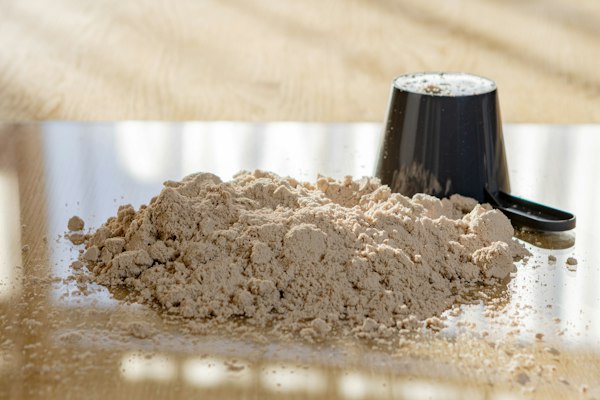 Nutrition
The problem is rarely the protein — it's the additives. Whey isolate vs pea vs hydrolyzed beef, ranked.
Read Guide → Cognitive
L-Theanine, Lion's Mane, Rhodiola, Bacopa — ranked by evidence, dosed correctly, stacked properly.
Read Guide → Sleep
Three ready-made stacks for onset insomnia, maintenance waking, and non-restorative sleep.
Read Guide →These are the four questions this hub uses to judge a product: evidence quality, third-party testing, dose and value. Evidence and testing come before price. Not every guide applies them the same way yet, and we are bringing the guides in line with them. Some guides also name a separate budget pick; when that pick lacks a certification the other options carry, the guide says so, as the creatine guide does for its best-value pick.
Does the ingredient, in this form, have human trials behind it? Randomised controlled trials and meta-analyses count for more than animal work or a plausible mechanism. We look at how big the effect was, who was studied, and who paid for the study.
Has an independent certifier (NSF, USP or Informed Sport/Informed Choice) checked the product? Supplements are not approved by the FDA before sale, so this is the main outside check on what is in the bottle.
Does a serving supply the amount used in the studies, stated per ingredient, and as the elemental amount where that applies? Products that hide doses inside a proprietary blend are marked down.
Only then: what does an effective daily dose cost? A commodity ingredient with a premium price and no extra testing to show for it does not earn a top spot.
What this method is not. We do not run our own laboratory tests. Rankings are built from published studies, manufacturers' labels and product pages, and certifiers' own descriptions of what their marks mean. Where the best evidence for a product comes from a study its maker paid for, the guide says so, as the sleep tracker guide does for Oura. How we research, cite and correct pages is set out in our editorial standards.
The guides above do the comparison for six categories. For anything else you are thinking of buying, these four checks will sort most products in a couple of minutes.
A certification mark means an outside organisation tested the product or audited how it is made. The marks are not interchangeable: each certifies something specific, so it helps to know what is behind the logo.
The broadest of the three: label accuracy, contaminants and banned substances in one mark.
A quality and label-accuracy mark. USP does not describe it as a banned-substance screen, so athletes should look for one of the sport marks.
Both programmes are built around banned substances and impurities. Their descriptions do not claim to verify the amount of each ingredient on the label.
One caution applies to every seal. The NIH Office of Dietary Supplements, writing about the quality seals of organisations such as ConsumerLab.com, NSF International and U.S. Pharmacopeia, notes that they indicate a product was properly manufactured, contains the ingredients on the label and does not contain harmful levels of contaminants, but that these seals do not guarantee that a product is safe or effective. The sport marks are no different on that point. A certified product can still contain an ingredient that does nothing for you.
US labelling rules let a company group ingredients under a "Proprietary Blend" (or another descriptive or fanciful name) and give only the total weight of the blend, with the ingredients listed from most to least by weight. Vitamins and minerals in a blend must still show their amounts, but for everything else (herbs, amino acids and other extracts) the amount of each individual ingredient does not have to appear.
That makes the dose impossible to check. A "focus blend" of six ingredients could hold a studied dose of the first one and trace amounts of the rest, and the label would look the same either way. If the guide for an ingredient says the studies used a particular dose, you need to see that number on the label. When you can't, treat the product as underdosed until shown otherwise.
Minerals come bound to another molecule, and the label can show two very different numbers. For magnesium, the NIH says the Supplement Facts panel declares the amount of elemental magnesium, the magnesium itself, not the weight of the whole compound. "Magnesium bisglycinate 500 mg" in the ingredient list is not 500 mg of magnesium: one ingredient supplier lists its magnesium bisglycinate at about 10.5% magnesium, which works out to roughly 50 mg.
It matters for two reasons. First, dose: the 2025 sleep trial behind our magnesium pick gave 250 mg of elemental magnesium a day, and the NIH's Tolerable Upper Intake Level of 350 mg a day for adults counts magnesium from supplements and medicines (not food), and like the label figure it is an amount of magnesium itself, not of the whole compound. Second, form: the NIH notes that forms that dissolve well in liquid are absorbed better, and small studies found the aspartate, citrate, lactate and chloride forms absorbed more completely than oxide or sulfate. In one 2001 comparison, the fractional absorption of magnesium oxide was 4%. A cheap tablet with a big number on the front can deliver less than it appears to.
The FDA does not approve dietary supplements for safety, effectiveness or labeling, and does not generally review them before they are sold. In many cases a company can start selling a supplement without notifying the FDA at all. The manufacturer is responsible for making sure the product is safe and labelled accurately; the FDA's role mostly begins once a product is already on the market.
So "FDA approved" on a supplement is a red flag, and a clinical-sounding label is not evidence. If you take prescription medicine, ask your doctor or pharmacist before adding a supplement: the NIH advises getting your health care provider's approval before combining supplements with prescribed medicines. Magnesium, for example, can interact with some antibiotics and with bisphosphonates used for osteoporosis.
No. The FDA does not approve dietary supplements for safety, effectiveness or labeling, and it does not generally review them before they go on sale. The company selling a supplement is responsible for making sure it is safe and accurately labeled. A supplement marketed as "FDA approved" is a reason for suspicion, not reassurance.
No. A seal from NSF, USP or Informed Sport tells you something about quality: that the product was made properly, that it contains what the label says (NSF and USP), or that it was screened for banned substances (NSF Certified for Sport and Informed Sport). The NIH Office of Dietary Supplements says plainly that quality seals, such as NSF's and USP's, do not guarantee a product is safe or effective, and the same is true of a sport mark. Whether an ingredient works is a question for the research, which is what each guide covers.
NSF Certified for Sport or Informed Sport. NSF says certified products do not contain any of 290 substances banned by major athletic organizations, and Informed Sport tests every batch for more than 285 banned substances before it is released. Informed Choice tests at least twelve random batches a year, so the batch you buy may not have been tested. USP Verified is about ingredients, potency, contaminants and manufacturing; USP does not describe it as a banned-substance screen.
Because the larger number is the weight of the whole compound, magnesium plus the glycine it is bound to, and the smaller number is the magnesium itself, the elemental amount. One ingredient supplier lists its magnesium bisglycinate at about 10.5% magnesium, so 500 mg of that compound gives roughly 50 mg of magnesium; other grades differ, so always read the elemental figure. Dose guidance, including the NIH upper limit of 350 mg a day from supplements for adults, refers to the amount of magnesium itself, not the whole compound.
Some links in the guides are affiliate links, so we earn a small commission if you buy through them, at no extra cost to you. There are no paid placements: a brand cannot pay to be included or to be ranked higher, and the order is set by evidence quality first and value second.
Recipes from the five regions, every one of them cited the same way these articles are.
The five levers with the strongest evidence behind them, a 90-day build that installs them one at a time, and the study behind every claim — all in one place.
Free. One email a week after that, unsubscribe in one click. Privacy