Plotted west to east — the only regions on the planet with verified concentrations of healthy centenarians. This is the complete guide: what each population actually eats and does, graded honestly — with every recipe and article on one page.
Ikaria earned its reputation the hard way: a mountainous Aegean island where reaching ninety is unremarkable and where measured rates of midlife dementia are among the lowest recorded in Europe. Its most famous son, Stamatis Moraitis, came home from America with a terminal cancer diagnosis and outlived all nine of his doctors — we tell that story, and the science behind it, in the full Ikaria article.
The island's pattern is Mediterranean eating with the volume turned up: wild greens gathered from the hillsides, legumes several times a week, olive oil in quantity, herbal teas in place of most else — stitched into a terrain that forces walking and a culture that refuses to hurry.
The Blue Zone idea was literally born here — demographers circling the long-lived villages of the Barbagia highlands in blue ink. What makes Sardinia unique in the world is its men: everywhere else, women dominate the century mark; in these shepherd villages the ratio is one to one. The full Sardinia article covers what the shepherd life actually involved — and what transfers to yours.
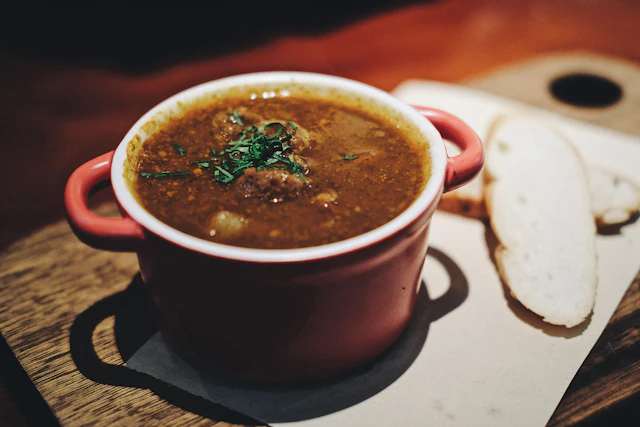
The kitchen runs on minestrone thick with three kinds of beans, barley and fregula, sheep's-milk cheese in modest amounts, and bread — fueling a working day that covered five-plus miles of hillside on foot, every day, for decades.
Okinawan women hold the world record for life expectancy among any large studied population, and the island gave longevity research two of its most exportable ideas. The first is hara hachi bu — the Confucian habit of stopping at eighty percent full, the only portion-control rule with a plausible mechanism and centuries of field testing. The second is the moai: a small social circle formed in childhood that meets for life, which is Lever Five of the five pillars operating on autopilot.
The traditional plate was startlingly humble: purple sweet potato supplied the majority of calories for generations, alongside tofu, bitter melon, miso and seaweed.
The Nicoya peninsula produces centenarians on a diet that costs almost nothing: black beans and corn tortillas — the tortillas nixtamalized in lime, which loads them with absorbable calcium — plus rice, squash and tropical fruit from the yard. Researchers who work the region also point at something harder to measure: plan de vida, the plainly stated reason to get up in the morning that Nicoyan elders volunteer without being asked.
Dinner is light and early, physical work continues into the nineties because nobody thought to stop, and family is not a weekend event.
The strangest Blue Zone is an hour from Los Angeles. The Seventh-day Adventist community of Loma Linda has been tracked by some of the largest diet cohorts ever run, and the result is hard to argue with: the most observant — largely vegetarian, nuts most days, no tobacco or alcohol — live up to a decade longer than their neighbors in the same state, same hospitals, same freeways.
Loma Linda matters because it removes the romantic excuses. No island, no mountain terrain, no ancestral olive groves — just a repeatable pattern run consistently inside modern America, plus one under-rated technology: a full 24-hour rest, every single week, taken together.
Some Blue Zone age records have been challenged by demographers on data-quality grounds, and the debate is genuine. It matters less than it sounds: this site grades the eating and living pattern on the cohort and modeling literature, which stands on its own evidence. The five regions above are where that pattern is easiest to see and copy — they are the illustration, not the proof. Our editorial standards explain how every claim on this site is graded.
The Longevity Calculator scores your own habits against the same evidence these five regions embody — every factor cited to a published study. Two minutes, free.