"Champuru" is Okinawan for "something mixed" — and it's as close as the island comes to a national dish. Of all the champuru variations, goya champuru is the one Okinawans name first, and the one their centenarians bring up unprompted when researchers ask about food. The goya — bitter melon — is a warty, unapologetically bitter gourd that grows over garden fences across the island. Okinawans don't fight the bitterness. They built their most beloved dish around it.
Traditional versions often include pork; this one follows the tofu-and-egg build that's equally common in Okinawan homes — and drops the egg easily for a fully plant-based plate.
The Ingredients
- 1 medium (300g) goya (bitter melon) — Asian groceries carry it; the wartier, the fresher
- 1 tsp salt, for massaging the goya
- 400g firm tofu, pressed 15 minutes and torn into rough chunks
- 2 eggs, beaten — omit for the vegan version
- 2 tbsp neutral oil, divided
- 1 small onion, sliced
- 2 tbsp soy sauce + 1 tbsp mirin (or 1 tsp sugar)
- 1 tsp sesame oil
- Bonito flakes (optional) or toasted sesame seeds, black pepper
How to Make It
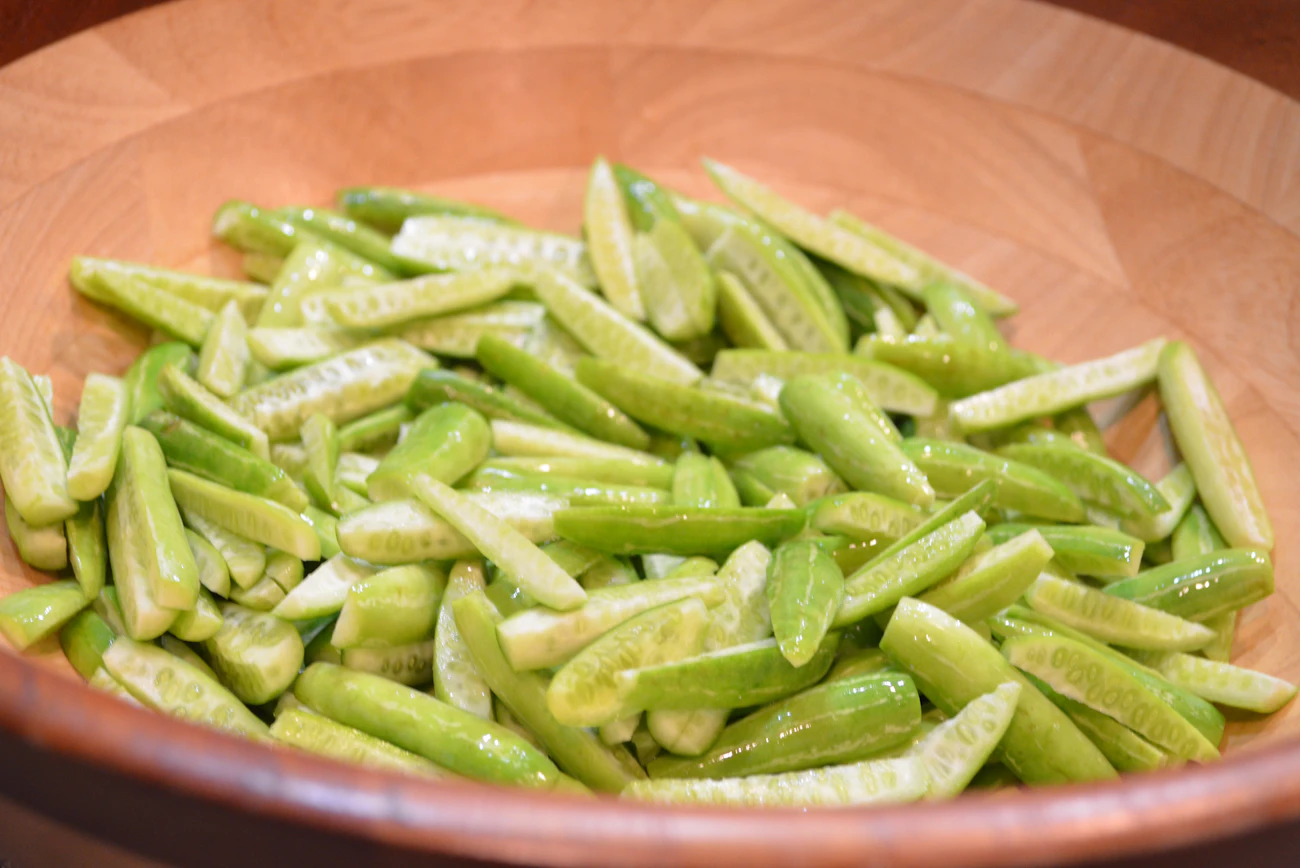
Halve it lengthwise, scrape out the seeds and white pith with a spoon — the pith carries the harshest bitterness — and slice into thin half-moons. Massage with the salt, rest 10 minutes, rinse and squeeze. What remains is the pleasant, grown-up bitterness the dish is built on.
Sear the torn chunks in half the oil over medium-high heat, undisturbed in patches, until the edges are golden — about 5 minutes. Torn tofu grips the sauce better than cubes. Set aside.
Remaining oil in, onion for 2 minutes, then the goya for 2–3 more. It should stay vivid green with real bite — overcooked goya turns army-drab and mushy, and deserves its bad reputation.
Tofu back in, soy and mirin over, a fast toss. Pour the beaten egg across the pan, let it just set for half a minute, then fold through in ribbons. Finish with sesame oil, black pepper, and a flurry of bonito flakes or sesame seeds.
Tips from the Island
Buy firm, green, and warty. Yellowing goya is overripe and turns unpleasantly soft. Firm and emphatically bumpy is what you want.
Calibrate the bitterness, don't kill it. More salt time and a squeeze = milder; skip the massage entirely if you've learned to love it, as Okinawans do. The bitter receptors adapt faster than you'd think — by the third time you make this, you'll salt it less.
Serve it the Okinawan way. With rice, a bowl of miso soup, and the hara hachi bu rule: stop at 80% full. The dish, the portion, and the pause are all part of the same tradition.