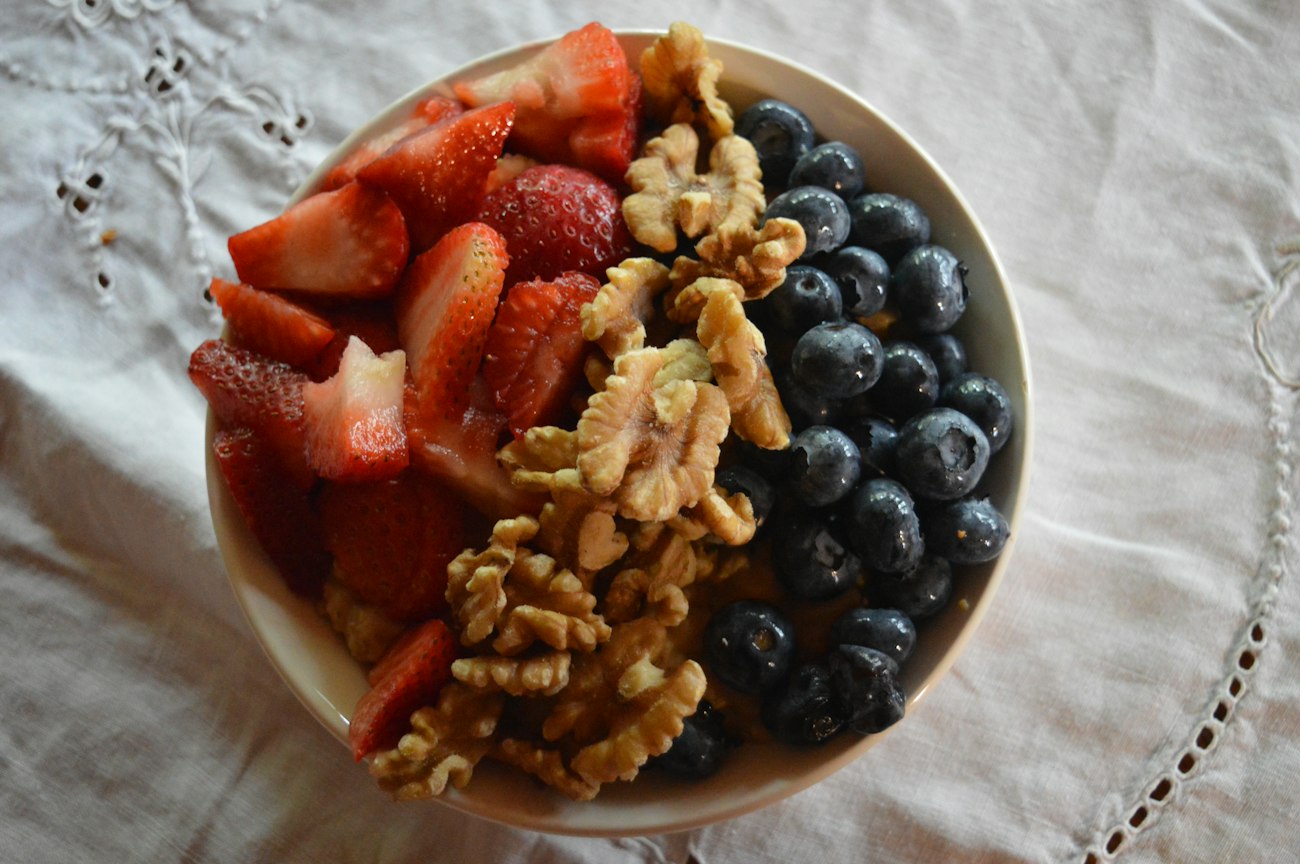
- "High" is a cut-point, not a cliff. Risk rises continuously with the number of cholesterol-carrying particles in your blood. The lines at 200 and 240 mg/dL exist to sort people into conversations — crossing one does not mean something changed in your arteries that week
- Menopause moves lipids on its own schedule. In a study of 1,054 women, total cholesterol, LDL and apolipoprotein B jumped in the one-year window around the final period — while most other risk factors rose in a straight line with age
- ApoB beats LDL-C. In 389,529 adults not on medication, when ApoB, non-HDL and triglycerides were tested together, only ApoB stayed independently linked to heart attack. It costs a few dollars and most women have never been offered it
- Lipoprotein(a) is the test almost nobody runs. More than 90% genetic, unmoved by diet — and in 37,545 women it ran 27% higher after menopause, which undercuts the usual "measure it once" advice for women specifically
- More HDL is not better. In 64,240 women, the lowest all-cause mortality sat around 93 mg/dL, and women above 135 mg/dL had 68% higher mortality. The "good cholesterol" framing is outdated
- Food moves the number more than most supplements. The Portfolio pattern lowered LDL about 17% in controlled trials — more than any pill on the shelf except the ones that are secretly statins
- Check for a cause before accepting a label. Thyroid, PCOS, pregnancy, oral estrogen and a recent low-carb diet all shift lipids. Treating a number without asking why it moved is how women get medicated for a thyroid problem
A woman turns 52. Her lipid panel comes back with an LDL of 148 — a number that sat near 115 for most of her adult life. The report has the word HIGH beside it in capital letters. Her doctor has eleven minutes and suggests a statin.
Nothing about that sequence is wrong, exactly. But an enormous amount is missing. Nobody asked whether her thyroid was checked. Nobody mentioned that the number she should probably be tracking wasn't on the panel at all. Nobody explained that the same LDL of 148 means something quite different in a woman with a family history of early heart attacks than in one without. And nobody told her that the specific jump she just experienced is one of the most predictable events in female physiology — it happens to most women within about a year of their last period, and it is not the same thing as her health deteriorating.
This is a long piece, because the honest version of this subject is not short. Here is what "high cholesterol" actually means, where the numbers came from, what changes for women specifically, and what genuinely lowers it without a prescription.
Part 1: Where "high" came from
Start with the part that people who distrust cholesterol guidelines usually get wrong, and the part that people who trust them completely also usually get wrong.
The causal link is real and it is about as well established as anything in cardiology. The European Atherosclerosis Society reviewed the genetic, epidemiological and clinical evidence together and concluded that LDL particles don't merely accompany atherosclerosis — they cause it. The strongest strand isn't the drug trials; it's the genetics. People born with gene variants that give them lifelong low LDL have dramatically less heart disease, in a dose-dependent way, with no drug involved. That is very hard to explain by anything other than causation.
And the thresholds are still arbitrary. Those two statements sit together comfortably, even though the internet treats them as opposing teams. Risk from cholesterol-carrying particles is continuous and lifelong — a smooth curve, not a step. There is no biological event at 200 mg/dL. The cut-points exist because clinicians need somewhere to draw a line for a decision, and the lines have moved repeatedly as trial evidence accumulated, always downward. They are policy, applied to a curve.
So when a lab prints HIGH, it is telling you where you fall in a distribution and which conversation you've been sorted into. It is not telling you what is happening inside your arteries, and it never could — because your risk depends on how long you've carried that number, what else is in your blood, and what your genes are doing.
Part 2: What a standard lipid panel actually measures
A basic panel gives you four numbers, and one of them is usually not measured at all.
| Number | What it is | What it misses |
|---|---|---|
| Total cholesterol | All cholesterol in the sample, including the HDL you don't want to lower | Nearly everything. A high number driven by high HDL means something different from one driven by high LDL |
| HDL-C | Cholesterol carried in HDL particles | Whether those particles work. HDL function varies, and the measurement doesn't capture it |
| Triglycerides | Fat circulating in the blood, strongly affected by your last meal and your insulin sensitivity | Nothing much — but it's often treated as a minor line when it's frequently the most informative one |
| LDL-C | Usually calculated, not measured: total minus HDL minus triglycerides divided by five | Accuracy when triglycerides are high or LDL is low, and the particle count — see below |
The LDL on most reports is an estimate produced by the Friedewald equation, published in 1972. It becomes unreliable when triglycerides climb above roughly 400 mg/dL and tends to understate LDL when it is already low. Newer methods exist and many labs have adopted them, but plenty have not.
Two practical notes before the interesting part. You probably don't need to fast. A joint European consensus concluded that fasting isn't routinely required for a lipid profile, and an analysis of the ASCOT trial found non-fasting samples predicted coronary events just as well as fasting ones. If fasting is the reason you've been putting the test off, stop putting it off.
And one reading is not your level. Lipids vary week to week with illness, weight change, recent alcohol, and where you are in your cycle. A single surprising result — in either direction — deserves a repeat before it becomes a decision.
Read your own lipid panel
Enter what's on your report. This does the arithmetic your lab skipped — non-HDL, remnant cholesterol, the triglyceride-to-HDL ratio — and tells you where each number sits against published thresholds, with the context that gets left off the printout. It is not a risk score and not medical advice.
Part 3: What changes for women
Cholesterol guidance was built largely on male data and then applied to everyone. Most of the time that's defensible. In several specific places it isn't.
Menopause moves lipids on its own timetable
The Study of Women's Health Across the Nation followed 3,302 women of African-American, Hispanic, Japanese, Chinese and white background through the menopause transition. Among the 1,054 who reached a natural final period without hormone therapy, researchers tested two competing explanations for how risk factors changed: ordinary linear aging, or something tied to the menopause itself.
The answer was unusually clean. Blood pressure, glucose, insulin, fibrinogen and CRP all followed the aging pattern — a slow steady climb. But total cholesterol, LDL cholesterol and apolipoprotein B all showed a distinct jump within the one-year window around the final period, and the pattern held across every ethnic group in the study.
This has a practical consequence that gets lost. A woman whose LDL rises from 118 to 146 between 50 and 53 has not necessarily changed a single habit. She has passed through a known physiological transition. That doesn't make the number harmless — carrying a higher LDL for the next thirty years still accumulates risk — but it does mean the right response is to re-baseline and reassess, not to assume something went wrong.
Lipoprotein(a): the test women are most often missing
Lp(a) is an LDL-like particle with an extra protein attached. It is pro-atherogenic, pro-thrombotic and pro-inflammatory, it contributes to aortic valve calcification, and its level is set more than 90% by genetics. Diet does essentially nothing to it. Exercise does essentially nothing to it. About one in five people carry enough of it to matter.
Because it's genetic, the standard advice is to measure it once in a lifetime. For women, that advice may be wrong. In the Copenhagen General Population Study — 37,545 women and 32,497 men — Lp(a) rose with age in both sexes, but women showed an additional rise around age 50. Levels ran 27% higher after menopause and 12% lower during hormone therapy. Above age 50, the risk conferred by a given Lp(a) was similar in women and men, which means elevated Lp(a) is a relatively more common risk factor in older women than the "measure once at 40" approach would ever reveal.
Lp(a) is a cheap add-on to a standard draw and does not require fasting. If you have never had it measured, it is the single highest-value test to add. If you had it measured before menopause and it was borderline, it is reasonable to ask for a repeat afterward.
"Good cholesterol" is a bad frame
Women are routinely reassured about a high HDL. The reassurance is only partly earned. In the Copenhagen City Heart Study and Copenhagen General Population Study combined — 64,240 women followed across 745,452 person-years — the relationship between HDL and all-cause mortality was U-shaped. The lowest mortality in women sat at about 93 mg/dL. Women with HDL at or above 135 mg/dL had a 68% higher risk of dying from any cause than women at the optimum.
This shouldn't be read as "HDL is bad." It should be read as: HDL is a marker, not a lever. Every drug developed to raise HDL directly has failed to reduce cardiovascular events. A high HDL in a woman with low triglycerides and good insulin sensitivity is a sign that things are working. A high HDL does not cancel out a high ApoB, and it has never been a licence to ignore the rest of the panel.
The triglyceride-to-HDL ratio has a blind spot
The TG:HDL ratio is a useful, free proxy for insulin resistance and small dense LDL, and it's widely recommended in longevity circles. It also has a specific and under-advertised failure mode: it does not work in Black women. An analysis within the Jackson Heart Study found the ratio failed to predict insulin resistance in African-American women, a finding replicated across several studies in African-American populations — Black adults tend to have lower triglycerides at any given level of insulin resistance, so the ratio reads falsely reassuring.
If you're Black and your TG:HDL ratio looks good, it means less than the internet implies. Fasting insulin, HbA1c or an oral glucose tolerance test carry the information the ratio is standing in for.
The risk calculators finally caught up — partly
For a decade, US risk estimation ran on the Pooled Cohort Equations, which used race as an input in ways that were both statistically crude and ethically awkward. In 2023 the American Heart Association released the PREVENT equations, developed on 3,281,919 adults and validated on another 3,330,085. They are sex-specific, race-free, run from age 30 to 79, include kidney function, and adjust for the competing risk of dying from something other than cardiovascular disease.
That last point matters more for women than it sounds. Women develop cardiovascular disease roughly a decade later than men, which means competing causes of death are doing more work in the same window — and a model that ignores them overstates the benefit of intervening. PREVENT generally produces lower risk estimates than the old equations, which means some women previously nudged toward medication now sit below the threshold.
Statins work in women. The trials just didn't study many of them.
This is the place where honest reporting requires holding two things at once.
The Cholesterol Treatment Trialists' Collaboration pooled individual data from 174,149 participants across 27 randomised trials. Only 46,675 — 27% — were women. That underrepresentation is real and it's a legitimate criticism of the evidence base.
But the analysis that underrepresented sample supports is fairly clear. Per 1.0 mmol/L reduction in LDL, major vascular events fell by a similar proportion in women (rate ratio 0.84) and men (0.78), with no statistically significant difference by sex — including among those at less than 10% predicted five-year risk. All-cause mortality fell in both.
The nuance is that proportional benefit is not absolute benefit. Women in these trials were at lower baseline risk than men. The same 16% relative reduction applied to a smaller starting risk produces a smaller absolute gain — fewer events prevented per hundred women treated, with the same rate of side effects. That is a real and legitimate reason for a lower-risk woman to weigh the decision differently. It is not a reason to believe statins don't work in women.
Part 4: The numbers that beat LDL-C
If you take one testable thing from this article, make it this one.
LDL cholesterol measures the cargo — how much cholesterol is being carried. ApoB counts the vehicles — every atherogenic particle carries exactly one ApoB molecule, so measuring ApoB gives you a particle count. Two women can have identical LDL of 130 while one carries far more particles than the other, and it's the particle count that gets into the artery wall.
A 2022 analysis tested this directly across 389,529 UK Biobank participants not taking lipid-lowering therapy, plus 40,430 patients with established atherosclerosis from two clinical trials. Individually, ApoB, non-HDL cholesterol and triglycerides were each associated with heart attack. Assessed together, only ApoB remained independently associated. The authors' conclusion was blunt: risk was best captured by particle number, independent of what those particles were carrying or which type they were.
| Test | Typical cost | Why it's worth asking for |
|---|---|---|
| ApoB | Low; often covered | Particle count. The best single predictor of heart attack in large cohorts. No fasting needed. Especially valuable if triglycerides are high or LDL and HDL look discordant |
| Lipoprotein(a) | Low, once | Largely genetic risk multiplier carried by ~1 in 5 people. Changes how aggressively everything else gets managed. For women, worth repeating after menopause |
| Non-HDL | Free — it's arithmetic | Total minus HDL. Already on your report if you subtract. Captures remnant particles that LDL misses |
| hs-CRP | Low | Inflammation. Not a lipid, but it refines risk when the lipid picture is ambiguous |
| Coronary artery calcium | Higher; often out of pocket | Looks at your actual arteries instead of inferring from blood. A score of zero in a woman at intermediate risk is genuinely reassuring; a high score reframes everything |
None of these replace a conversation with a clinician. They change what that conversation is about.
Part 5: Before you accept the label, rule out a cause
A high cholesterol result is sometimes a downstream symptom of something else entirely. Treating the number without asking why it moved is how a woman ends up on a statin for a thyroid problem.
- Hypothyroidism, including subclinical. Low thyroid hormone reduces LDL receptor activity and raises LDL. It disproportionately affects women, it's common around midlife, and correcting it often corrects the lipids. A TSH is the cheapest test on this page
- PCOS. Associated with an atherogenic pattern — higher triglycerides, lower HDL, more small dense LDL — largely through insulin resistance
- Pregnancy and the months after. Cholesterol rises substantially and normally in pregnancy. A panel drawn then, or shortly after, is not your baseline
- Oral estrogen. Oral estrogen lowers LDL but raises triglycerides because of first-pass liver metabolism; transdermal estrogen largely avoids that effect. Which form you take changes what your panel looks like
- A recent low-carbohydrate diet. See below — the response is highly variable and sometimes dramatic
- Rapid weight loss, recent illness, heavy alcohol, uncontrolled diabetes, kidney or liver disease, and some medications including certain immunosuppressants and antiretrovirals
The low-carb complication
This one deserves its own paragraph because it's increasingly common and badly handled in both directions.
Some people put on a carbohydrate-restricted diet see LDL rise sharply. An analysis of 548 adults eating this way found the rise was inversely related to BMI — the leaner and more metabolically healthy someone was, the bigger the LDL increase tended to be. A subgroup with LDL at or above 200 mg/dL, HDL at or above 80, and triglycerides at or below 70 was described as the "lean mass hyper-responder" phenotype. In a small case series, reintroducing moderate carbohydrate brought LDL down markedly.
Here's where honesty matters. The phenotype is real and well described. Whether it carries the same risk as the same LDL from ordinary causes is genuinely unresolved. The trial most often cited as showing plaque doesn't progress in these individuals — the KETO-CTA study — had an Expression of Concern issued by its journal in 2026. That doesn't mean its findings are wrong. It does mean nobody should be treating the question as settled, in either direction. If you're a lean hyper-responder, an ApoB and a coronary calcium score will tell you far more than another round of argument online.
Part 6: What actually lowers it without medication
Ranked by the quality of the evidence rather than by how often it appears in a supplement ad. Effect sizes are averages from controlled trials — individual responses vary widely, and someone starting at 190 has more room to move than someone starting at 125.
Eat the whole pattern, not one food
The Portfolio dietary pattern combines four cholesterol-lowering foods deliberately: viscous fibre, plant sterols, nuts, and plant protein such as soy or legumes. A meta-analysis of seven controlled trials in 439 people with high cholesterol found it lowered LDL by about 17% — roughly 28 mg/dL — on top of a standard cholesterol-lowering diet, and also improved non-HDL, ApoB, triglycerides, blood pressure and CRP.
That is a larger effect than any non-prescription supplement on this page, and it comes from food. The catch is that it requires the combination; any one component alone delivers a fraction of it. If you want a place to start, our Blue Zone recipes are built around exactly these ingredients — legumes, greens, nuts, olive oil — because the populations with the lowest cardiovascular mortality have been eating this pattern for centuries without calling it a protocol.
In practice: legumes most days, a handful of nuts, oats or barley, olive oil as the fat, and soy or pulses in place of some animal protein.Soluble fibre, especially psyllium
Psyllium binds bile acids in the gut, forcing the liver to pull cholesterol from circulation to make more. A meta-analysis of 28 randomised trials in 1,924 people found a median dose of about 10.2 grams a day lowered LDL by 0.33 mmol/L — roughly 13 mg/dL — and, importantly, also lowered non-HDL cholesterol and ApoB, meaning it reduces particles rather than just redistributing cholesterol.
It is cheap, it is food rather than a drug, and the side effects are bloating and the need to drink enough water. Start low and build up over a couple of weeks.
In practice: 5–10 g psyllium husk daily, taken with a full glass of water, built up gradually.Plant sterols and stanols
These block cholesterol absorption in the gut. A meta-analysis of 124 studies found doses between 0.6 and 3.3 grams a day reduced LDL by 6 to 12%, with a clear dose-response. A separate analysis suggested plant stanols reach a higher ceiling than plant sterols at the top of the dose range.
They come in fortified spreads, yogurt drinks and capsules. The effect is modest, reliable, and additive to the fibre above — which is why the Portfolio pattern includes both.
In practice: about 2 g/day, taken with a meal, which is where the fortified-food formats have an edge over capsules.Replace saturated fat rather than just removing it
A Cochrane review found that reducing saturated fat lowers cardiovascular events — but the benefit depends on what replaces it. Swapping saturated fat for polyunsaturated fat produces the clearest reduction; swapping it for refined carbohydrate does not, and tends to raise triglycerides instead.
This is the detail that makes low-fat advice fail. "Less butter" is not a plan. "Olive oil, nuts and fish instead of butter" is.
Red yeast rice — which is a statin
Red yeast rice works. It works because it contains monacolin K, which is chemically identical to lovastatin, a prescription statin. Anyone taking it to avoid statins is taking a statin with no dose on the label.
That is not a rhetorical point. When researchers analysed 12 commercial red yeast rice products all labelled "600 mg per capsule," monacolin K content ranged from 0.10 to 10.09 mg per capsule — a hundredfold spread between products a shopper would treat as interchangeable. One third of the products also contained citrinin, a mycotoxin that damages kidneys in animals.
If you want the effect of a statin, a prescribed statin has a known dose, a known purity and monitoring. If you take red yeast rice anyway, it carries the same drug interactions and the same muscle and liver considerations as the drug it contains — and your doctor needs to know you're on it.
Berberine — with a sex-specific footnote
A 2023 meta-analysis of 18 randomised placebo-controlled trials in 1,788 adults found berberine lowered LDL by 0.46 mmol/L (about 18 mg/dL), triglycerides by around 30 mg/dL, and ApoB in the two trials that measured it. No serious adverse events were reported, though gastrointestinal side effects were more common than with placebo.
The women-specific finding is the interesting part: berberine raised HDL by 0.11 mmol/L in women while slightly lowering it in men — a genuine divergence the authors attribute to possible effects on sex hormones. Two caveats worth weighing: 15 of the 18 trials were conducted in mainland China and Hong Kong, and berberine has meaningful drug interactions through CYP3A4. It is not a casual addition if you take other medications.
In practice: trials typically used 500 mg two to three times daily with meals, for 4 to 24 weeks.Bergamot
Citrus bergamot extract has a meta-analysis of randomised trials behind it showing improvements across the lipid profile. The evidence base is smaller and the trials shorter than for the options above, and product standardisation varies. Reasonable to try; not a substitute for the first four.
Omega-3 — for triglycerides, not LDL
High-dose omega-3 lowers triglycerides substantially. It does not lower LDL, and purified EPA-plus-DHA preparations can raise it modestly. If your triglycerides are the problem, this is a real tool; if your LDL is the problem, it isn't the one you want. Ordinary supermarket fish-oil doses are far below the doses used in the trials.
Exercise, honestly
Exercise is among the best things you can do for cardiovascular mortality, and it is not primarily an LDL intervention. Aerobic training reliably lowers triglycerides and modestly raises HDL; its effect on LDL is small. Resistance training preserves the muscle that protects metabolic health through and after menopause — see our workout guides — and both matter enormously for outcomes. Just don't expect the LDL line on your next panel to be the place you see it.
Garlic, niacin, and the rest of the shelf
Garlic supplements show small and inconsistent LDL effects. Niacin raises HDL impressively and failed to reduce cardiovascular events in large outcome trials while increasing side effects — one of the clearest demonstrations that moving a marker is not the same as changing an outcome. Policosanol, guggul and most "cholesterol support" blends do not have credible evidence behind them.
Stacked well — the Portfolio pattern, psyllium, sterols and a saturated-for-unsaturated fat swap — food-first changes can plausibly move LDL 20 to 30% in someone with room to move. That is a serious result, comparable to a low-dose statin, and it improves several other things at the same time.
What it will not do is override familial hypercholesterolemia, and it will not lower Lp(a) at all. If your LDL sits near 200 despite doing everything above, the honest answer is that your genetics are setting a floor that diet cannot reach.
Part 7: When medication is the honest answer
An article about lowering cholesterol without drugs is incomplete without this section, and leaving it out would be the kind of omission that gets people hurt.
There are situations where lifestyle is not the primary answer, and treating it as one costs years:
- LDL at or above 190 mg/dL. This raises the question of familial hypercholesterolemia, which affects roughly 1 in 250 people, is substantially underdiagnosed, and is underdiagnosed in women specifically. It means lifelong exposure from birth, not from midlife
- Established cardiovascular disease. Prior heart attack, stroke, stent or bypass changes the entire calculation
- Diabetes, particularly with other risk factors
- Very high Lp(a) alongside elevated LDL. You cannot lower the Lp(a) with lifestyle, so the lever that remains is the LDL
- A family history of early cardiovascular events — a parent or sibling before 55 in men, 65 in women
Two things women are told about statins deserve straightening out, in both directions.
The muscle-symptom question. Muscle aches are the most common reason women stop statins. Two well-designed trials tested this by giving people statin, placebo and nothing in randomised order without their knowing which. In the SAMSON trial, participants who had stopped statins because of side effects reported symptoms during placebo months at close to the rate they reported them during statin months. StatinWISE, a series of 200 individual randomised trials in primary care, found no overall excess of muscle symptoms on statin versus placebo. This does not mean the symptoms are imagined — they're real and they're felt. It means that for most people they are not being caused by the drug, which is worth knowing before writing off an entire drug class.
The diabetes question is more substantive, and it is specifically a women's issue. In the Women's Health Initiative, following 153,840 postmenopausal women over more than a million person-years, statin use at baseline was associated with a higher risk of new-onset diabetes — hazard ratio 1.48 after adjustment, observed across statin types. This is an observational finding with the limitations that implies, but it aligns with randomised evidence of a modest diabetes signal, and it matters more in a lower-risk woman whose absolute cardiovascular benefit is smaller to begin with.
Neither fact settles anything by itself. Together they describe what a real decision looks like: a woman with established heart disease has an easy call, and a 54-year-old with LDL 148, no family history, a calcium score of zero and good metabolic health has a genuine choice — one worth making deliberately, with her actual numbers, rather than by default in either direction.
"Has my thyroid been checked?" · "Can we add ApoB and Lp(a) to my next draw?" · "What's my estimated risk using PREVENT?" · "Would a coronary calcium score change what we do?" · "If I work on this with diet for three to six months, will you re-test before we decide?"
The number is real. The threshold is a decision.
Cholesterol-carrying particles cause atherosclerosis — that part is settled, and no amount of internet skepticism has moved it. What isn't settled, and never was, is that 200 or 240 marks a line between safe and unsafe. Those are places where clinicians agreed to start a conversation, applied to a risk curve that has no steps in it.
For women, three things get lost in the eleven-minute version. Menopause moves lipids on a schedule of its own, so a rising number at 52 needs re-baselining before it needs treating. The two tests that would tell you the most — ApoB and Lp(a) — are cheap and usually absent from the panel. And a high HDL was never the free pass it was sold as.
The useful move isn't to accept the label or to reject it. It's to get the numbers that actually predict something, rule out the causes that are really something else, do the food-first things that are genuinely well evidenced, and then make the medication decision once — deliberately, with real information, rather than by default.
References
Every claim above traces to one of these. Links go to the published record.
| Menopause & lipids | Matthews et al. J Am Coll Cardiol 2009 — SWAN, 1,054 women through final menstrual period. PMID 20082925 |
| LDL causality | Borén et al. Eur Heart J 2020 — European Atherosclerosis Society consensus. PMID 32052833 · Ference et al. 2017 PMID 28444290 |
| ApoB vs LDL-C | Marston et al. JAMA Cardiol 2022 — 389,529 UK Biobank participants. PMID 34773460 |
| Lp(a) in women | Simony et al. Atherosclerosis 2022 — Copenhagen, 37,545 women. PMID 35803767 · Review 2024 PMID 39624479 |
| HDL U-curve | Madsen et al. Eur Heart J 2017 — 64,240 women, 52,268 men. PMID 28419274 |
| TG:HDL in Black women | Sumner et al. Metab Syndr Relat Disord 2010 — Jackson Heart Study. PMID 20715971 |
| PREVENT equations | Khan et al. Circulation 2024 — 6.6 million adults. PMID 37947085 |
| Statins by sex | Cholesterol Treatment Trialists' Collaboration. Lancet 2015 — 174,149 participants, 27 trials. PMID 25579834 |
| Statins & diabetes | Culver et al. Arch Intern Med 2012 — Women's Health Initiative, 153,840 women. PMID 22231607 |
| Statin muscle symptoms | Howard et al. SAMSON, N Engl J Med 2020. PMID 33196154 · StatinWISE 2021 PMID 33709907 |
| Portfolio diet | Chiavaroli et al. Prog Cardiovasc Dis 2018 — 7 controlled trials, 439 participants. PMID 29807048 |
| Psyllium | Jovanovski et al. Am J Clin Nutr 2018 — 28 RCTs, 1,924 participants. PMID 30239559 |
| Plant sterols/stanols | Ras et al. Br J Nutr 2014 — 124 studies. PMID 24780090 · Musa-Veloso et al. 2011 PMID 21345662 |
| Saturated fat | Hooper et al. Cochrane Database Syst Rev 2020. PMID 32827219 |
| Red yeast rice | Gordon et al. Arch Intern Med 2010 — 12 commercial products analysed. PMID 20975018 |
| Berberine | Ju et al. Drugs 2023 — 18 RCTs, 1,788 participants, sex-stratified. PMID 36941490 |
| Bergamot | Phytother Res 2022 — systematic review and meta-analysis of RCTs. PMID 36251526 |
| Non-fasting lipids | Nordestgaard et al. Eur Heart J 2016 consensus. PMID 27122601 · Mora et al. JAMA Intern Med 2019 PMID 31135812 |
| Low-carb LDL response | Norwitz et al. Curr Dev Nutr 2022 — 548 adults. PMID 35106434 · Expression of Concern, KETO-CTA, JACC Adv 2026 PMID 41906601 |
- This article is educational and is not medical advice. It was written by a layperson who reads the primary literature carefully, not by a physician, and it has not been reviewed by a clinician
- Nothing here is a reason to start, stop or change any medication. Decisions about statins and other lipid-lowering therapy belong with a doctor who knows your history
- Supplements interact with medications. Berberine and red yeast rice in particular have real interaction profiles — tell your doctor what you are taking