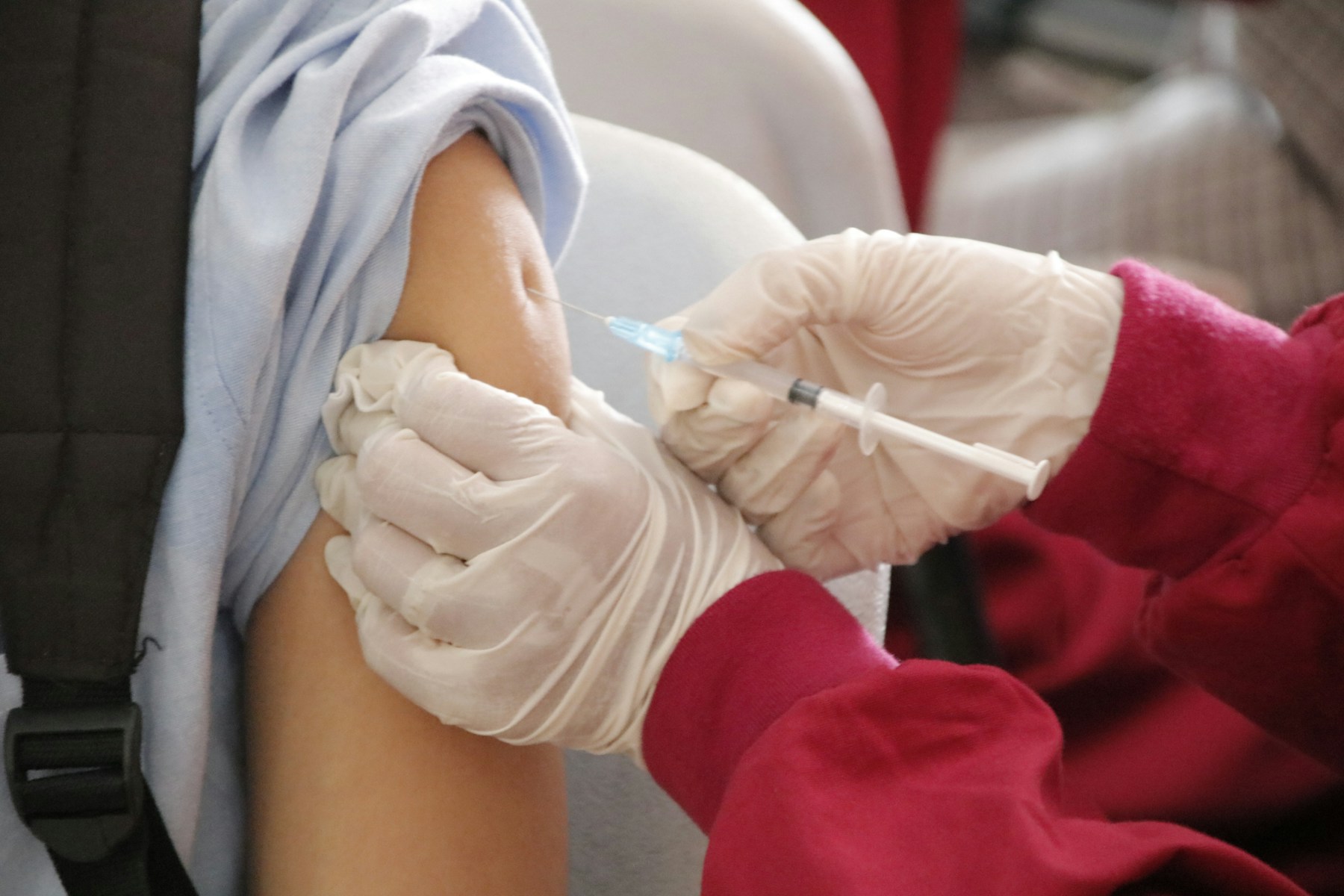
- Flu is early this year. As of week 41 (ending October 17, 2026), CDC's FluView showed the highest hospitalisation rate for mid-October since 2010–11, and almost every flu A virus subtyped was H1N1
- CDC's advice hasn't changed: CDC says its July 2025 flu recommendations "remain in effect": a yearly flu vaccine for everyone 6 months and older without a contraindication. Major medical societies agree
- Late October isn't too late. September or October is ideal, but CDC says to keep vaccinating through the season. Flu usually peaks between December and February
- At 65 and over, ask for an enhanced shot: high-dose, adjuvanted or recombinant. Their edge is real but modest; don't wait for a particular brand
- It's also a heart issue. In an Ontario study, heart attack admissions were about six times higher in the week after lab-confirmed flu
Every autumn the same question comes round, and this year it has an edge: flu has arrived early. Newsweek's 25 October headline asked "Should you get a flu shot now?" It's a fair question if you're in your 40s, 50s or 60s and wondering whether to wait so protection lasts into spring.
Here's what the guidance and research say about timing and which vaccine to choose, and why cardiologists care about flu. This isn't medical advice: talk to your doctor or pharmacist.
What CDC Is Seeing So Far
Evidence: Official surveillance, preliminary dataCDC's weekly FluView report for week 41 (ending October 17, 2026; published 23 October) says seasonal flu activity "is increasing in many parts of the country but remains low", and also that "early-season influenza activity is currently higher than typically observed at this time of year" (CDC FluView, week 41). The numbers, as of week 41 (ending October 17, 2026):
- Tests: 5.7% of specimens at clinical labs were positive, up from 5.0% the week before.
- Hospitals: 4,811 patients were admitted with lab-confirmed flu. In CDC's FluSurv-NET sample of counties, the weekly rate was 1.1 per 100,000, which CDC says is "the highest weekly rate for Week 41 since the 2010-2011 season."
- Which virus: 239 of 241 subtyped flu A viruses (99.2%) were A(H1N1)pdm09, a descendant of the 2009 pandemic strain. No H3N2 was found that week; the other two were H5 bird flu, and CDC says no human-to-human spread of H5 has been identified in the US.
Encouragingly, 82 of 88 H1N1 viruses CDC tested (93.2%) were "well-recognized" by antibodies against this season's vaccine virus, a lab match rather than proof of real-world protection. All three vaccine strains were updated this year, including H3N2, to cover the subclade K virus that spread widely in 2025–26 (CDC, 2026–27 season).
Newsweek, citing Walgreens data, reported the season running about four weeks ahead of recent years and quoted Dr. Amesh Adalja of the Johns Hopkins Center for Health Security: "It's too early to know the trajectory of the season, but people should get vaccinated ASAP" (Newsweek). An early start doesn't tell us how severe the season will be.
What the Recommendation Actually Says
Status: Unchanged from 2025, issued as interim guidanceHow US vaccine advice is made has changed since 2025, so precision matters. On 1 September 2026, CDC published interim flu guidance for clinicians. Citing "legal uncertainties and inquiries", it states that "the recommendations for seasonal influenza vaccination from the July 2025 immunization schedule remain in effect for the 2026-2027 influenza season." It adds that "all persons should receive an FDA-licensed age-appropriate influenza vaccine" (CDC interim considerations).
The universal recommendation itself is long-standing. CDC's most recent published ACIP flu recommendations, in MMWR in August 2025, read: "Routine annual influenza vaccination is recommended for all persons aged ≥6 months without a contraindication to vaccination" (MMWR, August 2025). That report also called for single-dose vaccines free of the mercury-based preservative thimerosal, after a June 2025 ACIP vote. That vote is among those a federal court paused in March 2026 (see below), and CDC's 2026–27 interim guidance doesn't mention thimerosal (Georgetown CCF).
The background: in March 2026, in AAP v. Kennedy, a federal judge in Massachusetts stayed HHS Secretary Robert F. Kennedy Jr.'s appointments to ACIP and the votes that committee had taken, along with a revised childhood schedule issued on 5 January 2026 (American College of Physicians, one of the plaintiffs; Pharmacy Times). As of early September, Healio reported that ACIP hasn't met in 2026, the government has appealed the ruling to the First Circuit, and a CDC spokesperson said the agency is finalising its 2026–27 vaccine recommendations, with no timeline (Healio). Separately, an executive order signed on 10 August 2026 sets out federal childhood vaccine recommendations that move children's flu vaccination from a universal recommendation to "shared clinical decision-making" between families and clinicians. It doesn't cover adults, and CDC's 1 September guidance doesn't mention it (Contagion Live).
What the medical societies say
By 2 September, the American Academy of Family Physicians (AAFP), American Academy of Pediatrics, American College of Obstetricians and Gynecologists and Infectious Diseases Society of America had released their own 2026–27 respiratory vaccine guidance (the AAP's flu guidance came out on 10 August). All four recommend a flu shot for everyone 6 months and older (Healthline). The AAFP's full adult guidance, published in American Family Physician on 16 October, says: "All adults 19 years and older should receive an annual influenza vaccine" (AAFP).
So on flu, they agree. The one difference is a new product. In August 2026 the FDA approved Moderna's mRNA flu vaccine, mFLUSIVA, for adults 50 and older; at 65 and older the approval is accelerated, based on immune responses, with benefit still to be confirmed (Moderna). In Moderna's main trial of 40,805 adults aged 50 and older, it cut lab-confirmed flu by 26.6% compared with a standard-dose flu shot (Moderna, June 2025; ABC News). That comparison was with a standard-dose vaccine, not the enhanced shots preferred at 65 and older. The AAFP lists it among preferred vaccines at 65 and older; CDC's interim guidance doesn't mention it.
Is It Too Late to Get It Now?
Evidence: Moderate — consistent observational data on waningNo. CDC says vaccination "should ideally be offered during September or October", and that "vaccination should continue after October and throughout the influenza season" while flu is circulating (CDC). It takes about two weeks after the shot for protection to develop (CDC vaccine information statement), and "most of the time flu activity peaks between December and February" (CDC). A shot in late October or November is still ahead of the usual peak.
Why not get it in August?
Because protection fades within a season. CDC advises that adults, especially those 65 and older, "should generally not get vaccinated early (in July or August) because protection may decrease over time" (CDC key facts). Two large observational studies back that up:
- US Flu VE Network, 2011–12 to 2014–15: effectiveness fell by about 7 percentage points a month against H3N2 and B, and 6 to 11 against H1N1, though some protection lasted at least 5 to 6 months (Ferdinands, Clin Infect Dis 2017).
- Kaiser Permanente Northern California, 2010–2017: using records of 44,959 people with flu, the odds of testing positive rose by about 16% for each extra 28 days since vaccination. At 154 days or more, the odds were about double those at 14 to 41 days (OR 2.06). RSV, used as a check, showed no such pattern (Ray, Clin Infect Dis 2019; CIDRAP).
Both are observational; the Ferdinands authors said bias or confounding could explain some of the pattern, and the Kaiser authors wrote that "any changes in recommendations regarding the timing of vaccination should be approached with caution." Wait too long and you risk catching flu first, or not getting vaccinated at all. With activity already rising, waiting for December makes little sense this year.
Which Shot for Your Age
Evidence: Strong for flu-specific outcomes at 65+; modest overallUnder 65, CDC states no preference. At 65 and older, CDC says adults "should preferentially receive any one of the following higher dose or adjuvanted influenza vaccines": high-dose (Fluzone High-Dose), recombinant (Flublok) or adjuvanted (Fluad, which contains an immune-boosting ingredient). If none is available, any other age-appropriate flu vaccine should be given (CDC). The AAFP adds that "vaccination should not be delayed if one is unavailable."
Flu vaccines for adults, by age
| Group | What guidance says | Examples |
|---|---|---|
| Adults 18–49 | Any age-appropriate vaccine; no preferred type | Standard-dose shots (Fluarix, FluLaval, Fluzone), cell-based Flucelvax, recombinant Flublok; nasal FluMist up to age 49 FluMist not for pregnancy or a weakened immune system |
| Adults 50–64 | Any age-appropriate vaccine; no preferred type | Standard-dose shots, Flucelvax, Flublok; mRNA mFLUSIVA (approved for 50+) AAFP: mRNA is an option "without preferential status" |
| Adults 65+ | Preferentially an enhanced vaccine | Fluzone High-Dose, Fluad (adjuvanted), Flublok (recombinant) AAFP also includes mRNA; if none available, any age-appropriate shot |
| Egg allergy | Any age-appropriate vaccine | No extra precautions beyond those for any vaccine |
CDC Interim Clinical Considerations, 2026–27 (licensed ages included); AAFP 2026–27 recommendations; Moderna (August 2026). Ask your doctor or pharmacist which suits you.
How much better are the enhanced shots?
The landmark high-dose trial randomised 31,989 adults aged 65 and older, double-blind, at 126 centres in the US and Canada over the 2011–12 and 2012–13 seasons. Lab-confirmed flu struck 1.4% of the high-dose group and 1.9% of the standard-dose group: a relative efficacy of 24.2% (95% CI 9.7 to 36.5) (DiazGranados, NEJM 2014; 2 Minute Medicine).
The much larger DANFLU-2 trial is more sobering. It randomised 332,438 Danes aged 65 and older to high-dose or standard-dose vaccine over three seasons (2022–23 to 2024–25), open-label, tracking outcomes through national registries. Its main outcome, hospitalisation for flu or pneumonia, was 0.68% versus 0.73%, a relative effectiveness of 5.9% (95.2% CI −2.1 to 13.4) that wasn't statistically significant (Johansen, NEJM 2025; ESWI).
For hospitalisation with flu itself, a secondary outcome, high-dose did better: 0.06% versus 0.11%, a relative effectiveness of 43.6% (95.2% CI 27.5 to 56.3). Pneumonia admissions and deaths didn't differ, and the authors noted that secondary outcomes weren't formally tested, so "no conclusions can be drawn" from them (Contagion Live). Pooled with a similar Spanish trial (466,320 adults in all), the figures were 8.8% for flu or pneumonia admissions and about 32% for flu-related hospitalisation (CIDRAP).

The Honest Numbers on Effectiveness
Evidence: Moderate — varies season to seasonThe flu shot is a good vaccine, not a great one, and its performance varies with how well it matches circulating viruses. CDC says that in seasons when the vaccine is well matched, "studies show flu vaccination reduced the risk of a flu-related doctor's visit by 40-60%." Among older adults it has reduced the risk of flu-related hospitalisation "by about 40% on average", according to a 2017 review CDC cites (CDC).
Flu vaccine effectiveness, season by season
CDC, Past Seasons' Vaccine Effectiveness Estimates (updated 16 March 2026): adjusted overall effectiveness, all ages. The 2022–23 confidence interval includes zero. The 2024–25 and 2025–26 estimates are preliminary and come from different study sites than earlier years, so seasons aren't perfectly comparable.
Even a middling year prevents a lot of illness. CDC classed 2024–25 as high severity, the first such season since 2017–18, with preliminary estimates of 51 million illnesses, 710,000 hospitalisations and 45,000 deaths. People 65 and older accounted for 57% of the hospitalisations and 71% of the deaths. CDC estimates vaccination prevented 10 million illnesses, 180,000 hospitalisations and 12,000 deaths that season (CDC, 2024–25 season summary). These are modelled estimates, not counts, and CDC says they stay preliminary until 2027.
Flu and Heart Attacks: The Link
Evidence: Strong association; one randomised trial after heart attackFlu isn't just a chest infection. In a 2018 NEJM study, Ontario researchers linked lab results to hospital records for people tested for respiratory viruses from 2009 to 2014. Using a self-controlled design (each person compared with themselves at other times), they found 364 heart attack admissions in 332 patients with lab-confirmed flu. The rate in the 7 days after a positive flu test was 6.05 times the rate in the year before and after (95% CI 3.86 to 9.50). The ratio was 10.11 for influenza B and 5.17 for influenza A (Kwong, NEJM 2018). After the first week, the excess largely disappeared (incidence ratio 0.6 for days 8 to 14) (The Hospitalist).
Heart attack rate in the week after infection, vs other times
Incidence ratios for heart attack admission in the 7 days after a positive test versus the year before and after. Self-controlled case series, Ontario, 2009–2014. Observational: an association, not proof of cause.
Does vaccination change heart outcomes? The best test is the double-blind IAMI trial (Circulation, 2021), which gave patients a flu vaccine or placebo within 72 hours of a coronary procedure or admission, mostly after a heart attack. Over 12 months among 2,532 patients, the main composite outcome (death from any cause, heart attack or stent clotting) occurred in 5.3% with vaccine versus 7.2% with placebo (HR 0.72, 95% CI 0.52 to 0.99). Death from any cause, a secondary outcome, was 2.9% versus 4.9% (HR 0.59, 95% CI 0.39 to 0.89). Repeat heart attacks didn't differ significantly (PCR; Patient Care).
The caveat: COVID-19 stopped the trial early, at about 58% of its planned size, making estimates less precise. The investigators said flu vaccination "should be considered as part of in-hospital treatment after myocardial infarction" (ACC). The trial evidence is strongest for people who've just had a heart attack, but if you have heart disease, or risk markers such as high ApoB or coronary plaque, it's one more reason not to skip your flu shot.
Getting It Done, Sensibly
- Talk to your doctor or pharmacist first if you've reacted to a previous flu vaccine, have a severe, life-threatening allergy, or have ever had Guillain-Barré syndrome (GBS), a rare nerve disorder. CDC says there "may be a very small increased risk" of GBS after flu vaccine (CDC VIS).
- Immune system weakened? Skip the nasal spray (licensed only to age 49 anyway), and if you've had a transplant or take immune-suppressing drugs, ask your specialist which shot and when.
- Egg allergy is no longer a barrier. CDC says people with egg allergy "may receive any influenza vaccine" suited to their age and health, with no extra precautions beyond those for any vaccine.
- Doubling up is fine. CDC says flu vaccine "may be given at the same time as other vaccines", and the AAFP says flu, COVID-19 and RSV vaccines "can be administered at the same office visit with no minimum interval", ideally in different arms, with side effects "similar to or modestly more common" than one shot. RSV isn't yearly: if you've had it, you don't need another this year.
- Expect a sore arm. Possible side effects include soreness, redness or swelling at the site, fever, muscle aches and headache. A flu shot can't give you flu (CDC).
- If you get flu anyway, call your doctor promptly if you're at higher risk. CDC says prescription antivirals "should be started as early as possible."
Frequently Asked Questions
Don't wait for the peak. If you're due, go soon.
Flu is running early, mostly H1N1, and CDC's advice is unchanged: a yearly flu vaccine for everyone 6 months and older without a contraindication. Protection fades over months, so August is too early, but late October and November still beat the usual December-to-February peak.
At 65 and over, an enhanced shot adds a modest edge; any shot beats none. Heart disease is one more reason not to skip it. Ask your doctor or pharmacist which vaccine suits you.
Sources
- Centers for Disease Control and Prevention. Interim Clinical Considerations for the Use of Seasonal Influenza Vaccines in the United States, 2026–2027. Published 1 September 2026.
- CDC. Weekly US Influenza Surveillance Report (FluView): Key Updates for Week 41, ending October 17, 2026. Published 23 October 2026. See also Week 40.
- CDC. 2026–2027 Flu Season. Updated 29 September 2026.
- Radcliffe J. Should you get a flu shot now? What we know about this year's dominant virus. Newsweek, 25 October 2026.
- Grohskopf LA, Blanton LH, Ferdinands JM, et al. Prevention and Control of Seasonal Influenza with Vaccines: Recommendations of the Advisory Committee on Immunization Practices — United States, 2025–26 Influenza Season. MMWR 2025;74(32):500–507, 28 August 2025.
- American College of Physicians (one of the plaintiffs). Federal Judge Blocks Immunization Schedule Changes, Stays ACIP Member Appointments. 16 March 2026. And Halpern L. Overhaul of Childhood Vaccine Guidance Blocked by Federal Judge in Massachusetts. Pharmacy Times, 16 March 2026. And Georgetown University Center for Children and Families, Court Order Presses Pause on New ACIP Committee and Changes to Childhood Vaccination Schedule, 31 March 2026.
- Healio. Physicians publish fall vaccine guidance, filling void left by CDC. 4 September 2026. And Healthline, U.S. Medical Groups Issue Flu, COVID Vaccine Guidance Independent of CDC, 8 September 2026. And Contagion Live, Presidential Executive Order Changes Childhood Vaccine Schedule to Reflect Current Administration's Aims, 11 August 2026.
- Savoy M, Wehr C; American Academy of Family Physicians. 2026–2027 Influenza, RSV, and SARS-CoV-2 Immunization Recommendations for Nonpregnant, Immunocompetent Adults and Health Care Personnel. American Family Physician 2026;114(5), published online 16 October 2026.
- Moderna. Moderna Receives U.S. FDA Approval for Influenza Vaccine mFLUSIVA. 5 August 2026. And ABC News, FDA approves Moderna's mRNA seasonal flu vaccine, 6 August 2026. Moderna, Moderna Announces Positive Phase 3 Results for Seasonal Influenza Vaccine, 30 June 2025.
- CDC. Vaccine Information Statement: Influenza (Flu) Vaccine (Inactivated or Recombinant). Edition dated 31 January 2025.
- CDC. Key Facts About Seasonal Flu Vaccine. Updated 1 September 2026. And Flu Season.
- Ferdinands JM, Fry AM, Reynolds S, et al. Intraseason waning of influenza vaccine protection: evidence from the US Influenza Vaccine Effectiveness Network, 2011–2012 through 2014–2015. Clinical Infectious Diseases 2017;64(5):544–550.
- Ray GT, Lewis N, Klein NP, et al. Intra-season waning of influenza vaccine effectiveness. Clinical Infectious Diseases 2019;68(10):1623–1630. As reported by CIDRAP.
- DiazGranados CA, et al. Efficacy of high-dose versus standard-dose influenza vaccine in older adults. New England Journal of Medicine, published 14 August 2014 (doi:10.1056/NEJMoa1315727). As summarised by 2 Minute Medicine and the American College of Cardiology.
- Johansen ND, et al. High-dose influenza vaccine effectiveness against hospitalization in older adults (DANFLU-2). New England Journal of Medicine 2025, published online 30 August 2025 (doi:10.1056/NEJMoa2509907). As summarised by ESWI, Contagion Live and the American College of Cardiology.
- CIDRAP. Analyses: High-dose flu vaccine better protects against hospitalization, infection than standard-dose (FLUNITY-HD pooled analysis, The Lancet).
- CDC. Past Seasons' Vaccine Effectiveness Estimates. Updated 16 March 2026.
- CDC. Benefits of Flu Vaccination. 28 May 2026.
- CDC. 2024–2025 Influenza Season Summary: Severity, Disease Burden, and Burden Prevented. 12 March 2026 (preliminary).
- Kwong JC, et al. Acute myocardial infarction after laboratory-confirmed influenza infection. New England Journal of Medicine 2018;378(4):345–353 (doi:10.1056/NEJMoa1702090). See also The Hospitalist.
- Fröbert O, Götberg M, Erlinge D, et al. Influenza vaccination after myocardial infarction: a randomized, double-blind, placebo-controlled, multicenter trial (IAMI). Circulation 2021, published online 30 August 2021 (doi:10.1161/CIRCULATIONAHA.121.057042). As reported by PCR, Patient Care and the American College of Cardiology.