- Mortality against sleep is a U. In 3.58 million people, risk was lowest at about seven hours and rose 6% per hour below and 13% per hour above. The long-sleep arm is mostly illness showing up as sleep, not sleep causing illness
- Regularity predicts death better than duration. In 60,977 people wearing accelerometers, the most regular sleepers had 30% lower all-cause mortality than the least regular, and the same bedtime every day beat the same total hours
- Short sleep does specific, measurable damage: one night of deprivation raises amyloid in the hippocampus; six hours a night at 50 carries 22% higher dementia risk 25 years later; under six hours quadruples the odds of catching a cold after deliberate exposure
- Sleep apnea affects one in six men aged 50 to 70 at the moderate-to-severe level, and most cases are undiagnosed. Untreated, it roughly triples cardiovascular events. Loud snoring plus daytime sleepiness is a reason to get tested this month
- The interventions ranked: CBT-I first — the American College of Physicians' initial treatment, cutting time awake in the night by 26 minutes — then a fixed wake time, morning light, a six-hour caffeine cutoff, alcohol off the bedside table, a warm bath. Melatonin buys about seven minutes. Magnesium's evidence is three small trials
- Trackers detect sleep well and wake badly — specificity for wake as low as 0.18 — and cannot stage sleep reliably. Read the weekly trend and ignore the nightly score
Sleep is the strangest item on the longevity list. It is the one intervention that takes a third of your life, costs nothing, and is skipped by more people than skip exercise — and it is the one that, until 2022, wasn't even on the American Heart Association's checklist of what keeps a heart alive. That year the AHA rewrote Life's Simple 7 as Life's Essential 8, and the new item — the eighth thing, alongside blood pressure, cholesterol, glucose, diet, activity, smoking and body weight — was sleep. Seven to nine hours scores full marks. Under four scores zero.
What follows is the case for that decision, made with the studies rather than the slogans. It runs in three parts: what the mortality data actually show about how much and how regularly you sleep; what sleep does mechanically that could explain those numbers; and then the interventions, ranked by evidence, so that the thing with a strong recommendation from the American College of Physicians sits above the thing with three small trials, rather than the other way round — which is the order the supplement aisle prefers.
Seven Hours, and the Shape of the Curve
Evidence: Strong — meta-analyses of millions; observational, self-reported hoursThe relationship between how long people sleep and how soon they die has been measured in more people than almost any other question in this field, and the shape has been stable for fifteen years. Cappuccio's meta-analysis in Sleep (2010) pooled 16 studies, 27 cohorts, 1,382,999 people and 112,566 deaths: short sleepers carried a relative risk of 1.12 for death from any cause, long sleepers 1.30. Jike's larger 2018 analysis in Sleep Medicine Reviews — 137 cohorts, 5,134,036 people — put long sleep at 1.39 for mortality, 1.46 for stroke, 1.26 for diabetes.
The most useful version treats hours as a dial rather than two boxes. Yin and colleagues in the Journal of the American Heart Association (2017) ran a dose-response meta-analysis across 67 studies and 3,582,016 people, and found the lowest all-cause mortality at roughly seven hours a night. Below that, every hour less carried 6% higher risk (relative risk 1.06 per hour). Above it, every hour more carried 13% (1.13 per hour). The curve varied little between men and women.
The shape of the curve, sketched from the per-hour relative risks in Yin's 2017 dose-response meta-analysis (67 studies, 3.58 million people): lowest at about seven hours, rising 6% for each hour less and 13% for each hour more. The curve compounds those per-hour figures; it is an illustration of the slopes, not the study's plotted data.
Two things about the long-sleep arm, because it's the part everyone gets wrong. First, it is steeper than the short-sleep arm in every one of these analyses, which reads as though oversleeping is more dangerous than undersleeping. It isn't. People who are already ill — with depression, heart failure, undiagnosed cancer, untreated sleep apnea — sleep longer, and then die of the thing that made them sleep. Sleep duration in these cohorts is a single question on a baseline form, and long sleep is largely a symptom being recorded as a habit. Second, the direction is consistent enough that a persistent need for nine or ten hours in someone who used to need seven is worth a conversation with a doctor — not because the sleep is harming them, but because of what it may be signalling. The Asia Cohort Consortium's 322,721-person analysis in JAMA Network Open (2021) found men sleeping ten hours or more had a hazard ratio of 1.34 for death against seven-hour sleepers, and women 1.48; the authors describe the curve as J-shaped and the sleep as self-reported, which is the honest reading of all of this.
The short-sleep arm is the actionable one. Its effect is smaller, 12% in Cappuccio and 6% per hour in Yin, but it is the arm you can move, and there is a mechanism behind it — several, in fact, which is part three. For now the practical number is the one the AHA landed on and the National Sleep Foundation's expert panel published in Sleep Health (2015): seven to nine hours for adults, seven to eight for older adults.
Regularity: the better predictor
Every study above measured sleep with a questionnaire. The one that measured it with a sensor changed the question. In 2024, Windred and colleagues published in Sleep an analysis of 60,977 UK Biobank participants who had worn wrist accelerometers for a week, from which the authors computed a Sleep Regularity Index — essentially, how likely you are to be in the same state, asleep or awake, at the same time on any two consecutive days. They then followed the cohort for a mean of 6.3 years, logging 1,859 deaths.
After adjustment for age, sex, ethnicity, deprivation, smoking, activity, body mass index, shift work and existing disease, the most regular fifth had a hazard ratio of 0.70 for all-cause mortality against the least regular — 0.76 for cancer mortality, 0.62 for cardiometabolic mortality. The paper's headline range of "20 to 48% lower" comes from the minimally adjusted model; 30% is the conservative figure. And the finding that earned the paper its title: when the authors compared models, sleep regularity predicted mortality better than sleep duration did, and adding duration to a regularity model didn't improve it. Their conclusion, verbatim, is that regularity "is a stronger predictor than sleep duration."
That reframes the whole question. The instruction isn't "get eight hours." It's "wake up at the same time," because wake time is the anchor the circadian clock sets itself by, and a clock that's reset by an hour or two every weekend spends the working week catching up. The Swedish data on weekends are consistent with this. Åkerstedt's 13-year follow-up of 43,880 people in the Journal of Sleep Research (2019) found, in people under 65, that consistently short sleep — five hours or less on weekdays and weekends alike — carried a hazard ratio of 1.65 for death, while short weekday sleep with long weekend sleep did not differ from the reference group. The authors put it carefully: weekend sleep "may" compensate for a short week. What it does not do is compensate for irregularity, because it is irregularity. The evidence lets you catch up on hours; it does not let you catch up on timing.
Two footnotes on the timing theme. Chronotype matters a little: in 433,268 UK Biobank participants, definite evening types had a 10% higher all-cause mortality than definite morning types (hazard ratio 1.10; Knutson, Chronobiology International 2018), a modest effect from a single self-report question, and one plausibly explained by night owls living on a lark's schedule. And insomnia matters in a specific way: in the Penn State cohort (Vgontzas, Sleep 2010), men who complained of insomnia and slept under six hours on laboratory polysomnography had four times the odds of death over 14 years compared with normal sleepers (odds ratio 4.00, confidence interval 1.14 to 13.99 — wide, from 741 men). Insomnia with normal objective sleep carried no such risk. The complaint alone isn't the danger; the complaint plus the genuinely short night is.
Five Things That Happen When You Don't
Evidence: Strong for mechanism — controlled human experiments, small and shortCohort data can only show association. The reason the sleep-mortality link is taken seriously rather than filed under "sick people sleep badly" is that when researchers take healthy people and shorten their sleep on purpose, specific and measurable things go wrong, quickly. Here are five, each from a controlled experiment.
The brain's waste clearance runs on sleep
In 2013 Xie and colleagues showed in Science that in sleeping mice the interstitial space between brain cells expands by 60%, and cerebrospinal fluid flushes through it, increasing the rate at which β-amyloid — the protein that accumulates in Alzheimer's — is cleared. Five years later Shokri-Kojori's group showed the human version in PNAS: twenty healthy adults had PET scans after a rested night and after one night without sleep, and the single sleepless night produced a significant increase in amyloid burden in the right hippocampus and the thalamus, independent of their APOE genotype. One night.
Whether that adds up to dementia across a life is a cohort question, and the best answer is Whitehall II. Sabia's analysis in Nature Communications (2021) followed 7,959 British civil servants for 25 years and 521 dementia diagnoses: sleeping six hours or less at age 50, compared with seven, carried a hazard ratio of 1.22; at 60, 1.37; persistently short sleep from 50 to 70, about 30% higher risk. (At 70 the estimate was 1.24 with a confidence interval touching 1, which the authors themselves call imprecise.) And Lo's meta-analysis in Sleep Medicine (2016; 97,264 older adults) found both short sleep (odds ratio 1.40) and long sleep (1.58) associated with poorer cognition — though in the prospective studies only short sleep predicted decline, which is the reverse-causation pattern again.
Six nights of short sleep and you handle sugar like a prediabetic
The experiment that started this field is still the cleanest. Spiegel, Leproult and Van Cauter took eleven healthy young men and restricted them to four hours in bed for six nights (Lancet, 1999). Glucose tolerance fell. Evening cortisol rose. Sympathetic nervous activity rose. Thyroid-stimulating hormone fell. All of it reversed with recovery sleep. Eleven men and one week is not a mortality study, but it is exactly the pattern — impaired glucose handling, elevated evening stress hormones — that, sustained for decades, becomes type 2 diabetes and hypertension, which is why the cohorts find what they find.
Appetite goes the same way. In 1,024 people from the Wisconsin Sleep Cohort (Taheri, PLoS Medicine 2004), habitual five-hour sleepers had 15.5% lower leptin — the hormone that says you're full — and 14.9% higher ghrelin — the one that says you're hungry — than eight-hour sleepers, independent of body mass. That is the hormonal setting for eating more, arriving before you've made a single decision about food.
Blood pressure doubles its odds
In the first National Health and Nutrition Examination Survey, 4,810 adults were followed for eight to ten years, and those sleeping five hours or less a night had a hazard ratio of 2.10 for developing hypertension among the 32-to-59-year-olds (Gangwisch, Hypertension 2006). The mechanism is the one Spiegel measured in the laboratory: sleep is when blood pressure dips, and a night that's too short — or, as we'll see, one that's repeatedly interrupted by a closed airway — is a night the dip doesn't happen.
The immune system stops answering
This is the study to show anyone who thinks sleep is a soft variable. Prather and colleagues (Sleep, 2015) measured the sleep of 164 healthy adults with wrist actigraphy for a week, then quarantined them, put rhinovirus up their noses, and watched for five days. Those who had been sleeping under five hours a night had an odds ratio of 4.50 for developing a clinical cold compared with those sleeping more than seven; five to six hours, 4.24; six to seven hours, 1.66 and not significant. The confidence intervals are wide — the lower bounds sit just above 1 — but the direction was clear, and the effect held after adjusting for everything from age to antibody levels to the season.
You don't notice
The finding that explains why the rest of this article is necessary. Van Dongen's group (Sleep, 2003) randomised 48 healthy adults to four, six or eight hours in bed for fourteen consecutive nights and tested them daily. Six hours a night — the amount a great many people consider fine — produced cognitive deficits that, by day fourteen, were equivalent to up to two nights of total sleep deprivation. And the subjects' own sleepiness ratings barely moved after the first few days. In the authors' words, they "were largely unaware of these increasing cognitive deficits." The feeling of having adapted to short sleep is itself a symptom of short sleep.
Sleep Apnea: Common, Unmeasured, and Treatable
Evidence: Strong for harm; mixed for what CPAP fixesBefore any intervention below, one diagnosis has to be excluded, because if it's present it swamps everything else. Obstructive sleep apnea is the airway collapsing during sleep — dozens of times an hour in severe cases — each collapse ending in a brief arousal and a surge of adrenaline that the sleeper doesn't remember. The night is spent, in effect, being repeatedly startled awake without ever waking up.
It is not rare. Benjafield's global estimate in Lancet Respiratory Medicine (2019) put 936 million adults aged 30 to 69 at mild-to-severe and 425 million at moderate-to-severe — a study funded by a CPAP manufacturer, which is worth knowing, though the prevalence data underneath it are independent. The Wisconsin Sleep Cohort's polysomnography estimates (Peppard, American Journal of Epidemiology 2013) for moderate-to-severe disease are 10% of men aged 30 to 49, 17% of men 50 to 70, 3% of women 30 to 49 and 9% of women 50 to 70. One man in six over fifty. And the same cohort estimated, in the 1990s, that 82% of men and 93% of women with moderate-to-severe disease had never been diagnosed (Young, Sleep 1997). Diagnosis has improved since, but the gap has not closed — home sleep tests are cheap and most people with the condition have still never had one.
The trial result is more complicated, and it's worth being honest about. SAVE (McEvoy, New England Journal of Medicine 2016) randomised 2,717 people who already had cardiovascular disease and moderate-to-severe apnea to CPAP or usual care and followed them for 3.7 years. CPAP did not reduce cardiovascular events — hazard ratio 1.10, no different from usual care. It did reduce snoring and daytime sleepiness and improve mood and quality of life. Two things about that trial matter for reading it: the participants used CPAP for a mean of 3.3 hours a night, which is less than half a night's protection, and they had been selected for having minimal sleepiness. The fair summary is that CPAP reliably fixes the sleep and the symptoms; whether it reverses cardiovascular damage already done in people who barely use it is unproven. The fair action is the same either way: if you snore loudly, wake unrefreshed, and are sleepy in the day — or your partner has watched you stop breathing — get the test. It's the one thing in this article that can make every other lever irrelevant until it's handled. The 3am waking piece covers the overlap with maintenance insomnia.
What Works, Ranked
Ranked by evidence quality and effect size — not by what's easiest to sellHere is the ladder. The rank is by two things together: how good the evidence is, and how big the effect is where it's been measured. The top is a treatment with a strong guideline recommendation and a meta-analysis of randomised trials behind it. The bottom is a supplement with three small trials. Everything on the list does something; the point of the ranking is that the order in which you try them should be this one.
CBT-I — the treatment almost nobody is offered
If you have had trouble sleeping for more than three months, this is the intervention, and it isn't close. In 2016 the American College of Physicians issued its guideline on chronic insomnia in Annals of Internal Medicine, and its first recommendation was that all adults receive cognitive behavioural therapy for insomnia as the initial treatment — a strong recommendation, on moderate-quality evidence. Medication came second, as a shared decision for people in whom CBT-I alone hadn't worked, with a weak recommendation on low-quality evidence.
The numbers behind that are Trauer's meta-analysis in the same journal (2015): 20 randomised trials, 1,162 people. After treatment, time to fall asleep was shorter by 19 minutes, time awake after falling asleep by 26 minutes, and sleep efficiency — the share of time in bed actually asleep — up by 9.9 percentage points. Total sleep time rose by about eight minutes, which wasn't significant; CBT-I doesn't mainly make you sleep longer, it makes the time in bed count. The gains were sustained at follow-up, which is the part no pill can claim.
CBT-I is a structured programme, usually four to eight sessions: stimulus control (bed is for sleep; if you're awake for twenty minutes, get up), sleep restriction (compress time in bed to the hours you actually sleep, then expand), and the cognitive work on the 3am arithmetic about tomorrow. Digital versions exist and have their own trials; a sleep clinic or a psychologist trained in it is the gold standard. The reason to put it first is that it's the only thing on the ladder that treats insomnia rather than tonight.
A fixed wake time — the cheapest lever in this article
Part one made the case: regularity beats duration in the only mortality study to measure sleep with a sensor. The practical instruction is a single alarm time, seven days a week, with bedtime allowed to float according to how tired you are. The wake time anchors the clock because it anchors the light exposure that follows it; a floating wake time is a clock that's reset by a different amount every day. If you can only do one thing on this list, this is the one — and it's the one that also makes the others work, because the caffeine cutoff and the evening light rule are both defined relative to a bedtime that has to be roughly the same each night to mean anything.
Light — get it in the morning, lose it at night
The circadian clock is set by light, and the two ends of the day pull it in opposite directions. Morning light, outside, within an hour of waking, advances the clock and starts the countdown to that evening's melatonin; the morning sunlight piece has the protocol and its evidence. Evening light does the reverse. Chang's crossover trial in PNAS (2015) had people read before bed from either a light-emitting e-reader or a printed book, for five nights each, under controlled conditions: on the e-reader nights they took longer to fall asleep, secreted less melatonin, shifted their circadian clock later, and were less alert the next morning. A phone is a smaller, brighter e-reader held closer. The rule that follows is unglamorous: screens dimmed or down in the last hour, and lights in the house lower than they are at noon.
Caffeine — the six-hour rule has a trial behind it
Drake and colleagues (Journal of Clinical Sleep Medicine, 2013) gave people 400 mg of caffeine — about two large coffees — at bedtime, three hours before, or six hours before, against placebo, and measured sleep both by diary and by a validated home monitor. All three timings significantly disturbed sleep. The six-hour dose was the surprise: enough objective sleep was lost that the authors' conclusion was a minimum six-hour caffeine-free window before bed. For a 10:30 bedtime that's nothing after 4:30 — and given caffeine's half-life of roughly five to six hours, an afternoon coffee at 3pm still has a quarter of its dose in you at bedtime. The people who "can drink espresso and sleep fine" are, on the evidence of the sleepiness ratings in the study above, mostly people who can't tell.
Alcohol — a sedative that costs you the second half
Alcohol is the most widely used sleep aid in the world, and the systematic review says exactly why it feels like it works and why it doesn't. Ebrahim's review in Alcoholism: Clinical and Experimental Research (2013) found that at every dose alcohol shortens the time to fall asleep and consolidates the first half of the night, with more slow-wave sleep early — and then increases sleep disruption in the second half. The first REM period is delayed at every dose, and total-night REM is reduced at moderate and high doses. So the drink buys a faster, deeper-feeling first three hours and pays for it with fragmented sleep at 3am and less of the REM the night was supposed to end with. It's the most common cause of the waking-at-3am pattern that sends people to the supplement aisle. The men's pyramid has the mortality side of alcohol; this is the sleep side, and it points the same way.
Heat — the warm bath is real, and the timing is the trick
Core body temperature has to fall for sleep to start, and warming the skin an hour or two before bed speeds that fall — the blood vessels in the hands and feet dilate and dump heat. Haghayegh's meta-analysis in Sleep Medicine Reviews (2019) pooled 13 studies and found that a warm bath or shower at 40 to 42.5 °C, taken one to two hours before bed, for as little as ten minutes, significantly shortened time to fall asleep and improved sleep quality and efficiency. The mistake people make is taking the bath and getting straight into bed while still warm; the window is the hour after, when the rebound cooling does the work. The same physiology argues for a cool bedroom — the evidence there is thinner, but it points the same way.
Exercise — small, reliable, and additive
Kredlow's meta-analysis of 66 studies in the Journal of Behavioral Medicine (2015) found that regular exercise produces small improvements in total sleep time and sleep efficiency, small-to-medium improvements in time to fall asleep, and moderate improvements in sleep quality; a single session has small effects on the same measures and a moderate effect on time awake in the night. Small effects, but from something you should be doing anyway for reasons that sit at the base of every longevity pyramid ever drawn. The old caution about evening exercise wrecking sleep is not well supported for moderate sessions; a hard interval session that ends an hour before bed is another matter, mostly through the temperature mechanism above.
Melatonin — seven minutes
This is where the ladder crosses from behaviour into bottles, and the effect sizes drop accordingly. Ferracioli-Oda's meta-analysis in PLoS One (2013) pooled 19 trials and 1,683 people: melatonin shortened time to fall asleep by 7.06 minutes and lengthened total sleep by 8.25 minutes, with a small improvement in subjective quality (effect size 0.22). The authors' own word for the effects is "modest," and they note the benefit is smaller than that of prescription hypnotics. Melatonin is a timing signal, not a sedative — it's most useful for shifting a clock (jet lag, a delayed sleep phase) at a low dose taken a few hours before the target bedtime, and least useful as a 10 mg knockout at midnight, which is how it's mostly sold. It's low-risk and it's cheap; it's also seven minutes.
Magnesium — three trials, and this site sells it
Full disclosure first: this site has a magnesium guide with affiliate links, which is exactly why the evidence needs stating plainly here. Mah and Pitre's systematic review in BMC Complementary Medicine and Therapies (2021) found three randomised trials in total, 151 older adults between them. Pooled, magnesium shortened time to fall asleep by 17.4 minutes against placebo; total sleep time rose by 16 minutes but not significantly. All three trials were at moderate-to-high risk of bias and the authors graded the evidence low to very low, concluding that physicians have "substandard evidence" on which to recommend it. So: plausibly helpful, especially in older adults who are often short of it; not proven; and a distant ninth on a ladder whose top four cost nothing. If you take it, the guide covers which form and why, and the stack article covers what not to combine it with.
What the Ring Knows and What It Guesses
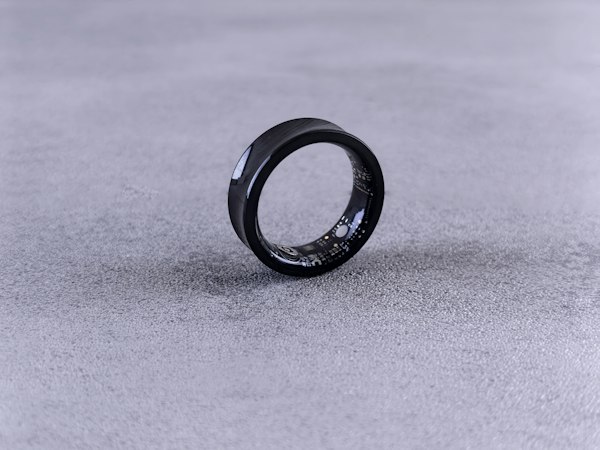
Evidence: Moderate — laboratory validation against polysomnographySleep trackers are the one longevity gadget with a genuine use, and the use isn't the one on the box. Chinoy and colleagues tested seven consumer devices — four wearables and three bedside sensors — against laboratory polysomnography in 34 young adults across three nights, one of them deliberately disrupted (Sleep, 2021). Every device was good at detecting sleep: sensitivity 0.93 or better. Every device was poor at detecting wake: specificity between 0.18 and 0.54, meaning that of the minutes you were actually awake in the night, the device caught somewhere between a fifth and a half. And the sleep-stage classifications — the deep and REM numbers that the apps make the most of — were inconsistent across devices, and worse on the disrupted night, which is precisely the night you'd want them to be right.
So the total sleep figure is reasonable, the wake figure is an undercount, and the stage breakdown is a guess dressed as a measurement. The right way to use one is the way this site's tracker comparison recommends: look at the weekly trend in total sleep and in regularity — the one thing the mortality data most reward, and the one thing a wrist sensor measures well — and ignore the nightly score. The wrong way has a name. Baron and colleagues coined "orthosomnia" in the Journal of Clinical Sleep Medicine (2017) for patients presenting to sleep clinics with insomnia that began when they bought a tracker: people lying in bed trying to raise a number, who trusted the app's verdict over their own experience and over the clinic's polysomnography. A tracker that makes you anxious about sleep is a tracker that's costing you sleep.
Four Weeks, in Order
Week one: rule out apnea, fix the wake time
If you snore loudly, wake unrefreshed or fall asleep in the afternoon — or anyone has ever watched you stop breathing — book a home sleep test before doing anything else. Separately, pick a wake time you can keep on Saturday and set one alarm. Let bedtime find itself.
Week two: the two cutoffs
No caffeine within six hours of bed; no alcohol as a sleep aid, and none within three hours of bed on the nights you do drink. Morning light within an hour of waking, outside. These are the levers with placebo-controlled or crossover trials behind them and they cost nothing.
Week three: the evening
Warm shower or bath ninety minutes before bed, then a cool room; screens down for the last hour; the house dimmer than it was at noon. If the problem is falling asleep, this is the week it usually moves.
Week four: if it's still broken, it's insomnia — treat it as one
Three months of bad nights, three or more a week, is chronic insomnia, and the treatment is CBT-I, not a stack. Find a clinician or a validated digital programme. Add melatonin or magnesium afterwards if you want, knowing what they're worth: seven minutes, and three small trials.
The supplement aisle has the ladder upside down. Turn it over.
The mortality data say seven hours, at the same time every day, and that regularity is the half of that instruction people ignore. The mechanism data say that a week of six-hour nights measurably degrades your glucose handling, your blood pressure, your immune response and your brain's waste clearance — and that you won't feel it happening. And the treatment data say the thing that works best is a course of structured therapy that most people are never offered, followed by four free habits, followed, a long way down, by the bottles.
So rule out apnea. Set one alarm. Cut the caffeine at six hours and the nightcap entirely. Take the bath. And if three months later the nights are still broken, get CBT-I — not a stronger magnesium.