
- Married women do live a little longer on average. In a 2020 meta-analysis of about 7.9 million people, unmarried women had a 22% higher risk of death than married women. For unmarried men the figure was 46%
- The gap is smaller for women than for men in most big analyses, for single, divorced and widowed alike
- Mothers lived slightly longer in a Swedish study of about 1.4 million people: at 60, mothers could expect 24.6 more years and childless women 23.1. Risk looks lowest at a moderate number of children, not the most
- None of this proves cause. Healthier people may be more likely to marry and have children, and the researchers say so
- Quality and connection matter. Better marriages are linked to better health, and across 148 studies, people with stronger social relationships of any kind had 50% higher odds of survival
Do women live longer if they're married with children, just married, or single? In 2019 a widely shared story said single, childless women were the healthiest and happiest group. Other headlines say the opposite.
Here's what the largest studies show for women specifically, and what seems to matter more than marital status or family size. None of this is a case for marrying or having children for your health: life choices aren't health interventions, and many people don't get to choose them anyway.
Married vs Unmarried Women: The Big Numbers
Evidence: Consistent association — observational onlyThe most direct answer for women comes from a 2020 meta-analysis in Global Health Research and Policy by Yafeng Wang, Mark Woodward and colleagues. They pooled 21 studies covering 7,881,040 people to ask whether the link between marital status and death differs for women and men. Every study was adjusted for at least age (Wang, Glob Health Res Policy 2020).
Compared with married women, unmarried women had a 22% higher risk of death from any cause over the study periods (relative risk 1.22). For men it was 46%. By group, never-married women had a 46% higher risk, divorced or separated women 27% and widowed women 14%. The women-to-men ratio of 0.87 was statistically significant: the gap is real for women, but smaller than for men. The authors concluded that being unmarried "conferred higher risk of stroke and all-cause mortality for men than women" (abstract via DOAJ).
Higher risk of death compared with married people, by sex
Bars show pooled relative risks of death from any cause (1.46 = 46% higher), each group compared with married people of the same sex. Observational studies adjusted for at least age.
Two other large reviews broadly agree:
- Never married. A 2011 meta-analysis in the American Journal of Epidemiology by David Roelfs and colleagues pooled 641 risk estimates from 95 publications covering more than 500 million people. In the best-adjusted, highest-quality estimates, never-married people had an average hazard ratio of 1.24. The gap has widened modestly over the decades for both sexes, but "somewhat more rapidly for women", and it was smaller at older ages (Roelfs, Am J Epidemiol 2011).
- Older adults. A 2007 review in Social Science & Medicine by Lamberto Manzoli and colleagues pooled 53 comparisons with more than 250,000 older people. Married people had a 12% lower risk of death than the non-married (relative risk 0.88), and this estimate "did not vary by gender". Adding eight comparisons first left out shrank the advantage to 6% (Manzoli, Soc Sci Med 2007).
A "22% higher risk" is relative: it means 22% more than the yearly chance of dying for a married woman of the same age. In midlife that baseline is small, so the absolute difference is small too; it grows with age. It is not 22% of your lifespan.
Divorce, Widowhood and the Sex Gap
Evidence: Consistent association — weaker in women- Divorce and separation. A 2012 meta-analysis by Eran Shor, David Roelfs and colleagues pooled 625 estimates from 104 studies in 24 countries, covering more than 600 million people. The average hazard ratio was 1.37 for men and 1.22 for women, and "the difference between men and women decreases as the mean age increases" (Shor, Soc Sci Med 2012).
- Widowhood. The same team's 2012 review in Demography pooled 1,377 estimates from 123 publications. Widowed people had an average hazard ratio of 1.23; it was 1.27 for men and 1.15 for women (Shor, Demography 2012).
- The first six months. A 2011 meta-analysis in PLOS ONE of 15 prospective cohort studies with 2,263,888 people found the "widowhood effect" was strongest in the first six months after bereavement (relative risk 1.41) and smaller after that (1.14). For women, the overall risk wasn't statistically different from no effect (1.04); for men it was 1.23 (Moon, PLOS ONE 2011).
The risk linked to being unmarried is smaller in women
| Comparison (vs married) | Studies | Women | Men |
|---|---|---|---|
| Any unmarried status | 21 studies, 7.9 million people (2020) | 1.22 | 1.46 |
| Divorced or separated | 104 studies, 24 countries (2012) | 1.22 | 1.37 |
| Widowed | 123 publications (2012) | 1.15 | 1.27 |
| Widowed | 15 cohorts, 2.3 million people (2011) | 1.04 not statistically significant | 1.23 |
| Non-married, older adults | 53 comparisons, 250,000+ people (2007) | Married 0.88 overall estimate "did not vary by gender" | |
Wang, Glob Health Res Policy 2020 (relative risks); Shor, Soc Sci Med 2012 and Demography 2012 (average hazard ratios); Moon, PLOS ONE 2011 (relative risks); Manzoli, Soc Sci Med 2007 (married vs non-married). 1.22 = 22% higher risk of death than married people of the same sex. All observational.
It's Not Just Married, It's How Married
Evidence: Moderate — small but consistent effectsMarital status is a crude label that puts a supportive partnership and a hostile one in the same box. A 2014 meta-analysis in Psychological Bulletin by Theodore Robles and colleagues looked at quality instead: 126 studies over 50 years, with more than 72,000 people (Robles, Psychol Bull 2014).
"Greater marital quality was related to better health," including a lower risk of death. The effects were small, "similar in magnitude to previously found associations between health behaviors (e.g., diet) and health outcomes." On sex, the picture was mixed: studies with a higher share of women showed larger effects, but studies that directly tested for a difference between women and men found little evidence of one.
This research can't say whether an unhappy marriage is better or worse for lifespan than being single. It does suggest the average "marriage benefit" spans very different relationships.
Mothers, Childless Women and Family Size
Evidence: Consistent association — causes unclearThe best-known parenthood study is Swedish. Karin Modig and colleagues used national registers to follow 704,481 men and 725,290 women born between 1911 and 1925, all living in Sweden at 60 (Modig, J Epidemiol Community Health 2017).
At 60, women with at least one child could expect to live another 24.6 years, against 23.1 for childless women: about 1.5 years more. For men the figures were 20.2 and 18.4 years, about two years more. The difference in yearly risk of death grew with age: at 80 it was 0.71 percentage points for women and 0.90 for men, after accounting for education and marital status. The link held after accounting for whether people had a partner (it was somewhat stronger in the unmarried, at least among men) and didn't depend on the child's sex (full text).
The authors suggest support from adult children may explain part of it, but write that "selective elements and alternative explanations" can't be ruled out. Healthier people may be more likely to have children in the first place, and children living abroad weren't counted.
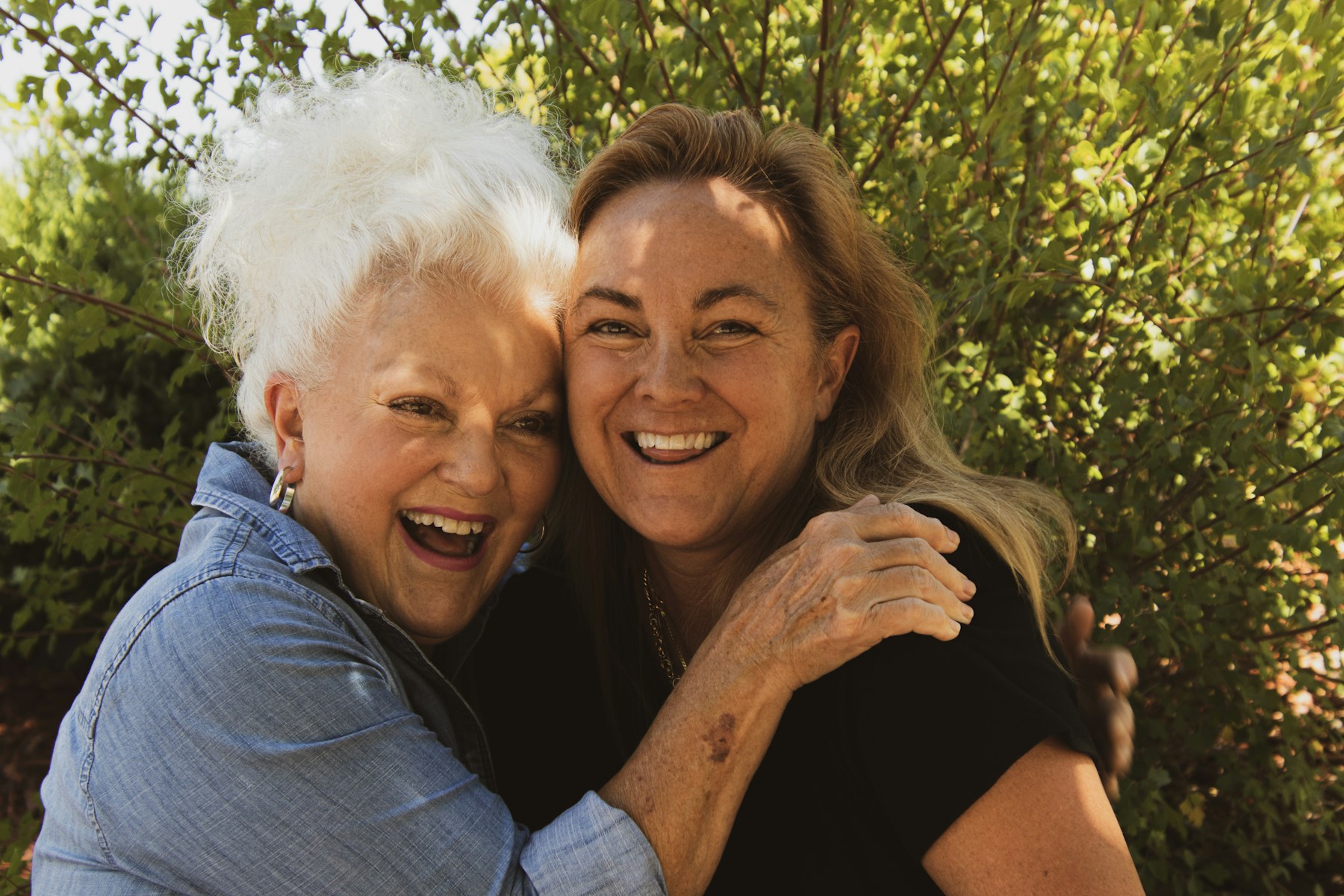
Does the number of children matter?
The link isn't simply "more children, longer life".
- A dose-response meta-analysis in Scientific Reports (2016) pooled 18 articles with 2,813,418 participants. It found a J-shaped pattern: the lowest risk of death was at three or four live births (relative risk 0.96 compared with no children), though this wasn't significantly lower than at two births. People with no children had a 19% higher risk than parents (relative risk 1.19). It pooled women and men; for childless people vs parents, results by sex were similar (Zeng, Sci Rep 2016).
- A Swedish sibling comparison by Kieron Barclay, Martin Kolk and colleagues (2016) looked at men and women born 1932–1960. Comparing siblings reduces confounding from shared upbringing and family background. The pattern was U-shaped: "childless men and women and those with five or more children had the highest mortality", and teenage first-time parents also had higher mortality. The authors caution that "it is still uncertain whether reproductive history causally influences health", and that factors such as childhood health or risk-taking could explain the link (Barclay, Soc Sci Med 2016).
What about having a child later?
A 2014 analysis in Menopause drew on the Long Life Family Study, which recruits families with unusually long-lived members, and compared 462 women who did and didn't live exceptionally long. Those whose last child came after 33 had twice the odds of living to 95 or older as women whose last child was born by 29. The study's corresponding author, Thomas Perls, stressed that "this does not mean women should wait to have children at older ages": a later birth may be a sign of slower ageing, not a cause of longer life (Boston University School of Public Health).
What studies of parenthood and lifespan actually found
| Study | Who | Finding | Main caveat |
|---|---|---|---|
| Modig, Sweden, 2017 | 725,290 women and 704,481 men born 1911–1925 | Life expectancy at 60: mothers 24.6 years, childless women 23.1 men: 20.2 vs 18.4 | Selection not ruled out |
| Zeng, meta-analysis, 2016 | 18 articles, 2.8 million people | J-shaped: lowest risk at 3–4 births; childless 19% higher risk than parents | Women and men pooled |
| Barclay, Sweden, 2016 | Men and women born 1932–1960, siblings compared | U-shaped: highest mortality in the childless and those with 5+ children | Cause still uncertain |
| Long Life Family Study, 2014 | 462 women | Last child after 33: twice the odds of reaching 95+, vs last child by 29 | A marker of ageing, not advice |
Modig, J Epidemiol Community Health 2017; Zeng, Scientific Reports 2016; Barclay, Social Science & Medicine 2016; Long Life Family Study, Menopause 2014. All observational.
"Single, Childless Women Are Happiest": What Happened
Evidence: Claim partly correctedIn May 2019, behavioural scientist Paul Dolan of the London School of Economics spoke at the Hay Festival about his book Happy Ever After. As reported by The Guardian, he said: "The healthiest and happiest population subgroup are women who never married or had children." He said married people were happier "but only when their spouse is in the room", and that a married woman "dies sooner than if she never married" (The Guardian, via inkl).
The "spouse in the room" point didn't survive scrutiny. The economist Gray Kimbrough pointed out that in the American Time Use Survey, the category "spouse absent" refers to whether a spouse lives in the household, not whether they were in the room during the interview (Catholic News Agency). Dolan said he thought Kimbrough was right, that "we have misinterpreted the variable", and that he had contacted The Guardian and his editor so the book could be corrected. He kept his broader view that marriage is generally better for men than for women. The Guardian removed the passage about the spouse's presence from its report (Washington Free Beacon).
The fair reading: the mortality gap linked to being unmarried is larger for men than for women, but the large studies don't support the idea that marriage shortens women's lives.
Why the Link Exists, and Why It's Not the Whole Story
Evidence: Mechanisms plausible — not provenWang and colleagues discuss several explanations, which can coexist:
- Selection. "Marriage selection theory proposes that healthier individuals were more likely to marry or stay married." If health shapes who marries, part of the gap reflects health that came first. The authors also admit they "were not able to adjust properly for baseline differences in confounding factors."
- Support. Unmarried people "may obtain less emotional, financial and companionship support."
- Why men show a bigger gap. The authors cite a figure that "66% of men rely on their wives for their primary social supports", and point to sex differences in drinking, smoking, inactivity and doctor visits.
A 2010 meta-analysis in PLOS Medicine by Julianne Holt-Lunstad and colleagues pooled 148 studies with 308,849 people, followed for 7.5 years on average. People with stronger social relationships had a "50% increased likelihood of survival" (odds ratio 1.50), consistent across age and sex. Studies measuring only marital status were excluded; complex measures of social integration showed the strongest link (odds ratio 1.91). The authors called the influence of social relationships "comparable with well-established risk factors for mortality" (Holt-Lunstad, PLOS Med 2010).
A spouse and children are one route to that kind of connection; friends, siblings, neighbours and community are others. We covered the opposite in our write-up of a 277,489-person study of loneliness and healthy years.
What This Means for You
- Don't read your status as a forecast. These are population averages, not predictions for any one woman.
- Invest in your network, whatever your status. The strongest signals here are about the quality and breadth of relationships, not a label on a form.
- If a relationship is harming you, that matters. Talk to your doctor or a counsellor if it's affecting your health or safety.
- Watch the months after a loss. The risk after widowhood is highest early. If you've lost a partner, tell your doctor and lean on the people around you.
- Focus on what's in your control. The everyday habits linked to a longer life apply whatever your family situation. Our longevity pyramid for women ranks them by evidence.
Frequently Asked Questions
A modest average gap, not a life plan.
On average, married women and mothers live slightly longer than single and childless women. The gap is smaller for women than for men in most large analyses, and it's tangled up with who marries and has children in the first place.
The more useful finding cuts across every status: the quality of your relationships and how connected you are are linked to how long you live. You can build that at any age, married or not, with children or without. For questions about your own health risks, talk to your doctor.
Sources
- Wang Y, Jiao Y, Nie J, O'Neil A, Huang W, Zhang L, Han J, Liu H, Zhu Y, Yu C, Woodward M. Sex differences in the association between marital status and the risk of cardiovascular, cancer, and all-cause mortality: a systematic review and meta-analysis of 7,881,040 individuals. Global Health Research and Policy 2020;5:4 (doi:10.1186/s41256-020-00133-8). Abstract via DOAJ.
- Roelfs DJ, Shor E, Kalish R, Yogev T. The rising relative risk of mortality for singles: meta-analysis and meta-regression. American Journal of Epidemiology 2011;174(4):379–389 (doi:10.1093/aje/kwr111).
- Manzoli L, Villari P, Pirone GM, Boccia A. Marital status and mortality in the elderly: a systematic review and meta-analysis. Social Science & Medicine 2007;64(1):77–94.
- Shor E, Roelfs DJ, Bugyi P, Schwartz JE. Meta-analysis of marital dissolution and mortality: reevaluating the intersection of gender and age. Social Science & Medicine 2012;75(1):46–59.
- Shor E, Roelfs DJ, Curreli M, Clemow L, Burg MM, Schwartz JE. Widowhood and mortality: a meta-analysis and meta-regression. Demography 2012;49(2):575–606 (doi:10.1007/s13524-012-0096-x).
- Moon JR, Kondo N, Glymour MM, Subramanian SV. Widowhood and mortality: a meta-analysis. PLOS ONE 2011;6(8):e23465 (doi:10.1371/journal.pone.0023465).
- Robles TF, Slatcher RB, Trombello JM, McGinn MM. Marital quality and health: a meta-analytic review. Psychological Bulletin 2014;140(1):140–187 (doi:10.1037/a0031859).
- Modig K, Talbäck M, Torssander J, Ahlbom A. Payback time? Influence of having children on mortality in old age. Journal of Epidemiology & Community Health 2017;71:424–430 (doi:10.1136/jech-2016-207857).
- Zeng Y, Ni Z, Liu S, et al. Parity and all-cause mortality in women and men: a dose-response meta-analysis of cohort studies. Scientific Reports 2016;6:19351 (doi:10.1038/srep19351).
- Barclay K, Keenan K, Grundy E, Kolk M, Myrskylä M. Reproductive history and post-reproductive mortality: a sibling comparison analysis using Swedish register data. Social Science & Medicine 2016;155:82–92 (doi:10.1016/j.socscimed.2016.02.043).
- Boston University School of Public Health. Reproduction later in life is a marker for longevity in women. 25 June 2014 (on a Long Life Family Study analysis in Menopause).
- Extended maternal age at birth of last child and women's longevity in the Long Life Family Study. Menopause, published online 25 June 2014 (print edition January 2015); details via EurekAlert.
- Holt-Lunstad J, Smith TB, Layton JB. Social relationships and mortality risk: a meta-analytic review. PLOS Medicine 2010;7(7):e1000316 (doi:10.1371/journal.pmed.1000316).
- Cain S. Women are happier without children or a spouse, says happiness expert. The Guardian, 25 May 2019 (as syndicated by inkl).
- Catholic News Agency. Are single women actually happier? Study misinterprets data, researchers say. 29 May 2019 (republished by Catholic World Report).
- Lehman CF. No, marriage doesn't make you 'f---ing miserable'. Washington Free Beacon, 29 May 2019, updated 31 May 2019.