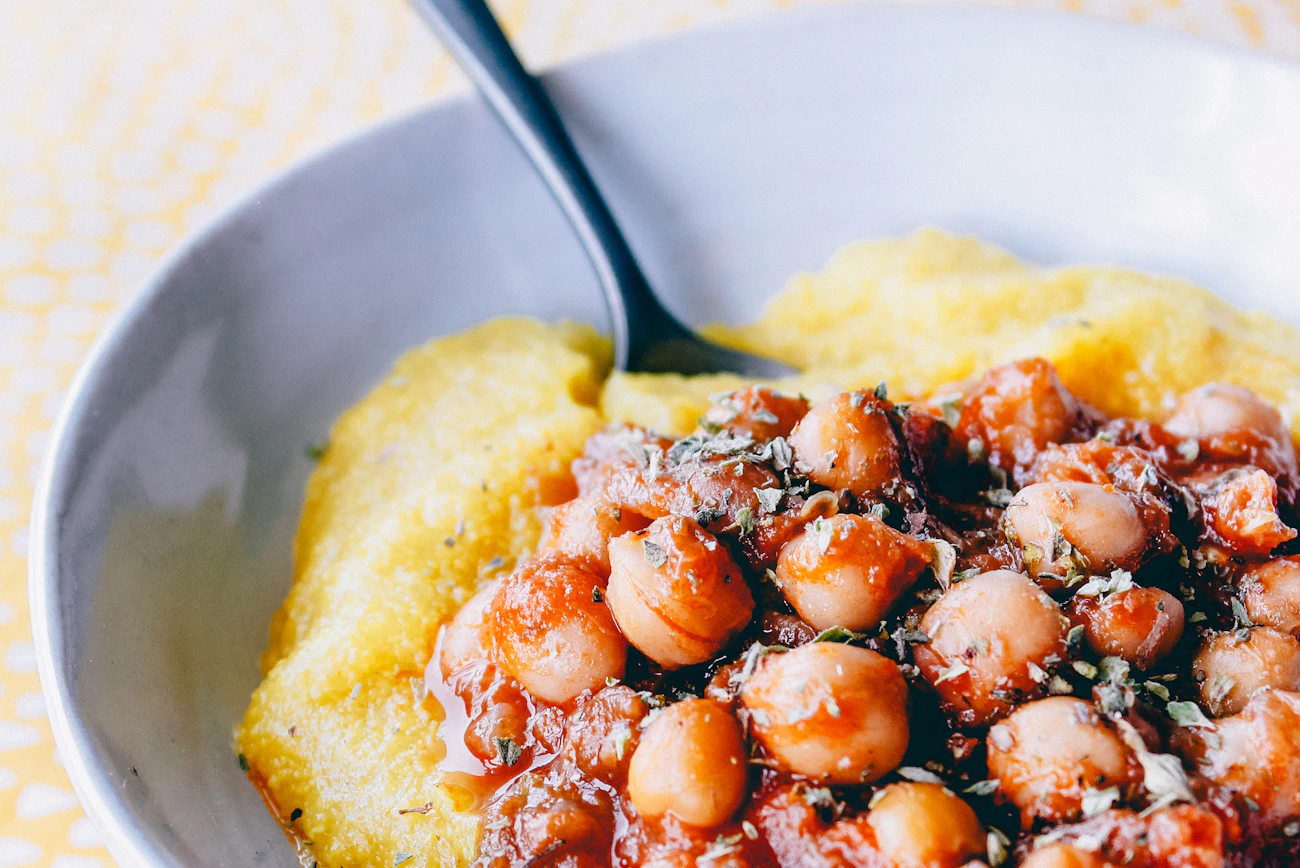
Fregula is Sardinia's answer to a question no one else thought to ask: what if pasta were toasted first? The little hand-rolled semolina beads are baked until nutty and golden before they ever meet water, and they carry that roasted-wheat depth into everything they're cooked with. Paired with chickpeas — as they have been in Sardinian kitchens for centuries — they make the island's weeknight version of the grain-and-legume pattern that anchors every Blue Zone table.
This is peasant food from the same tradition as the daily minestrone: cheap, filling, mostly pantry, endlessly repeatable. Which is precisely the point. The Sardinian shepherds in the longevity studies didn't eat remarkable things — they ate unremarkable things with remarkable consistency.
The Ingredients
- 250g (9oz) fregula sarda, toasted, medium grade — Israeli/pearl couscous is the accepted substitute (toast it 3 minutes in a dry pan first)
- 400g (14oz) cooked chickpeas — one can, drained, liquid reserved
- 4 tbsp extra-virgin olive oil, plus more to finish
- 1 small onion, finely diced
- 3 garlic cloves, thinly sliced
- 1 sprig + 1 tsp rosemary — a whole sprig for the pot, chopped needles for depth
- 2 tbsp tomato paste
- 300g ripe or canned tomatoes, chopped
- 1.2 litres hot vegetable stock or water
- Pinch chilli flakes, optional
- 40g Pecorino Romano or Sardo, grated — optional; omit for the vegan version
- Sea salt, black pepper, chopped flat-leaf parsley
How to Make It
Warm the olive oil in a wide, heavy pot over medium heat. Soften the onion for 6–8 minutes — patient, not browned. Add the garlic, both rosemaries, and the chilli flakes; cook one minute more, until the kitchen smells like Sardinia.
Stir in the tomato paste and let it fry a full minute — it should darken a shade. Add the tomatoes and the chickpeas with their reserved liquid. Simmer 5 minutes, mashing a spoonful of chickpeas against the side of the pot; the crushed ones thicken the broth into something silky.
Add the fregula and a litre of hot stock. Cook at a lively simmer, stirring often the way you would a risotto, 12–15 minutes. The toasted beads drink liquid greedily — add the remaining stock as needed. You're aiming for loose: wetter than pasta, thicker than soup.
Off the heat, stir in half the pecorino if you're using it. Season boldly — chickpeas absorb salt quietly and reward you for checking twice. Rest two minutes; fregula keeps drinking as it sits.
Ladle into wide bowls. Finish each with a serious pour of your best extra-virgin olive oil, the rest of the pecorino, and a scatter of parsley. Bread is traditional, optional, and inevitable.
Tips from the Highlands
Toast the substitute. If you're using pearl couscous instead of true fregula, three minutes in a dry pan until golden recovers most of the nutty character that defines the dish.
The chickpea liquid is stock. The canning liquid (aquafaba) carries body and seasoning — reserving it is the difference between a broth with backbone and one without.
Dried chickpeas, if you have the day. 250g dried, soaked overnight and simmered until tender, with the cooking liquid standing in for most of the stock — this is the full Sunday version and it is noticeably better.
Repeat it. The Blue Zone pattern isn't a dish, it's a frequency: legumes four or more times a week. Between this, the minestrone, and the fakes soupa, the rotation builds itself.