- In the PURE study (≈140,000 people, 17 countries), every 5kg drop in grip strength meant a 16% higher risk of death from any cause
- Grip predicted all-cause and cardiovascular death better than systolic blood pressure — a finding since echoed in ~500,000 UK Biobank participants
- Grip is a readout, not a cause: it reflects total-body muscle, nutrition, and physiological reserve — training only your hands misses the point
- A $30 hand dynamometer gives you a tracked biomarker in ten seconds; healthy midlife grip is roughly 40–50kg for men, 25–32kg for women
- The fix is whole-body: dead hangs, farmer's carries, rows and deadlifts without straps, plus 1.2–1.6g of protein per kg for older adults
- Muscle after 50 is the retirement account analogy that actually works — you draw on it during every illness, surgery and fall
Your doctor measures your blood pressure at every visit. Your smartwatch counts your steps, guesses your sleep stages, and interrupts you to breathe. And yet one of the strongest single predictors of how long you'll live discovered in modern epidemiology fits in a handshake — and almost nobody measures it.
In 2015, The Lancet published results from the PURE study — the Prospective Urban Rural Epidemiology project, which followed nearly 140,000 adults across 17 countries on five continents, from Sweden to Zimbabwe. Participants squeezed a hand dynamometer; researchers then tracked who died over the following four years. The finding: every 5-kilogram decrease in grip strength was associated with a 16% higher risk of death from any cause — and grip strength predicted both all-cause and cardiovascular mortality better than systolic blood pressure did.
Three years later, a University of Glasgow team ran the same question through the UK Biobank — around half a million British adults — and published in The BMJ. Same signal, at scale: lower grip strength meant higher risk of death from all causes, cardiovascular disease, respiratory disease, and cancer, in both sexes, even after adjusting for the usual suspects. The handshake, it turns out, is carrying medical information.
Why Your Hands Know So Much
Be clear about what this is not: nobody is claiming that forearm muscles keep you alive, and crushing a stress ball at your desk will not add years. Grip earns its predictive power by being an honest, cheap, ten-second window into several things that are genuinely hard to measure.
Total-body muscle, sampled at the wrist
Grip correlates tightly with whole-body muscle mass and strength. A weak grip almost always means weak everything — and muscle mass is the tissue most protective against the frailty cascade of late life. You cannot fake a strong grip with strong hands alone; it is downstream of the whole system.
Physiological reserve — the survival buffer
Every serious illness, surgery, and hospital stay is partly a muscle-burning event. People enter these episodes with different reserves, and grip is one of the best bedside estimates of that reserve. It is why surgeons increasingly test grip before major operations: it predicts who bounces back.
Muscle as a metabolic organ
Skeletal muscle is the body's largest site of glucose disposal — the more functional muscle you carry, the flatter your blood-sugar curves and the lower your insulin resistance. Contracting muscle also releases myokines, signaling molecules with anti-inflammatory effects. Low grip flags a body running short on this machinery.
Neuromuscular integrity
Producing force requires the nervous system to recruit muscle quickly and completely — the same capacity that catches a stumble before it becomes a hip fracture. Grip decline often precedes measurable disease because the wiring degrades before the diagnosis arrives.
This is also the honest caveat: because grip is a readout, the causal arrow is the whole-body strength and health behind it. The dashboard light matters because of the engine. Which is good news — engines respond to maintenance.
Test Yourself This Week
A hand dynamometer — the same class of device used in the studies — costs about as much as a takeout dinner. Squeeze with your arm at your side, elbow at 90 degrees, three attempts per hand, best score counts. Ten seconds, one number, trackable for life.
Rough healthy benchmarks in midlife: men around 40–50kg, women around 25–32kg, with a gradual decline after 50 that is normal — and a steep one that is not. The commonly used clinical thresholds for concerning weakness are below ~26kg for men and ~16kg for women, the levels used in sarcopenia screening. But the single best use of the number is the trend: measure quarterly, write it down, and treat a sustained drop the way you'd treat rising blood pressure — as a prompt, not a verdict.
No dynamometer? The functional proxy is the dead hang: hang from a pull-up bar with straight arms. Most healthy adults should manage 30 seconds; over a minute is good; struggling to hold 10 seconds is information worth having.
"Grip strength was a stronger predictor of all-cause and cardiovascular mortality than systolic blood pressure." — Leong et al., The Lancet, 2015 (PURE study)
The Fix Is Not Hand Exercises
Since grip reflects the whole system, the program that moves it is ordinary, boring, magnificent resistance training. Fifteen minutes twice a week genuinely moves the needle for beginners. The shortlist, in rough order of value:
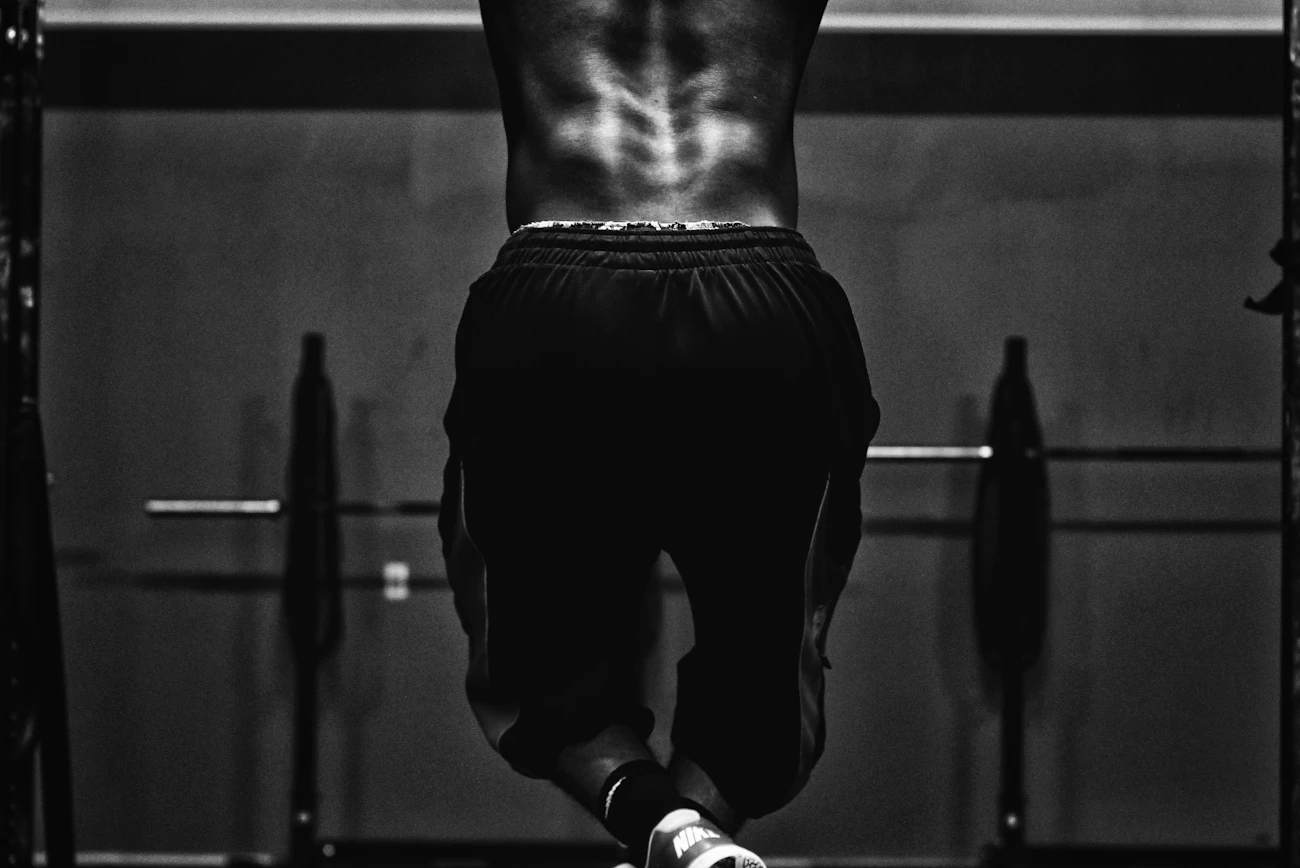
Dead hangs — 3 × as long as you can, twice a week
Grip, shoulders, and spine decompression in one free exercise. Progress from 20-second holds toward accumulated 2-minute totals. A doorway pull-up bar is all it takes.
Farmer's carries — heavy, short, upright
Pick up the heaviest pair of dumbbells you can hold with good posture and walk 20–40 metres; rest; repeat 3–5 times. It trains grip exactly the way life tests it — under load, while moving. Groceries in one trip is the folk version.
Pull and hinge — without straps
Rows, deadlifts, and their variants, letting your hands do the holding. The grip develops as a side effect of training the big muscle that actually shows up in the mortality statistics.
Feed the muscle you're building
Resistance training without protein is a construction site without materials. The evidence supports roughly 1.2–1.6g per kg of body weight daily for older adults training seriously — see our complete protein guide, and why creatine is the best-evidenced supplement for preserving strength with age.
Notice what's absent: grippers and wrist rollers. They're harmless, and climbers need them — but for longevity purposes they polish the gauge instead of fixing the engine.
Where This Fits in Your Larger Number
Strength is one input among the handful that reliably move life expectancy — alongside not smoking, cardiorespiratory fitness, diet pattern, sleep, and social connection. Our Longevity Calculator puts them together: eleven evidence-graded factors, two minutes, every effect size cited to a published study, and a share-able estimate of where your habits currently point. Strength training is one of its higher-leverage levers — this article is why.
And if you want the fuller picture of how movement patterns produce durable bodies without a gym at all, the shepherds of Sardinia are the standing counterexample: five miles of hills a day, every day, for seventy years. Their grip was never in question.