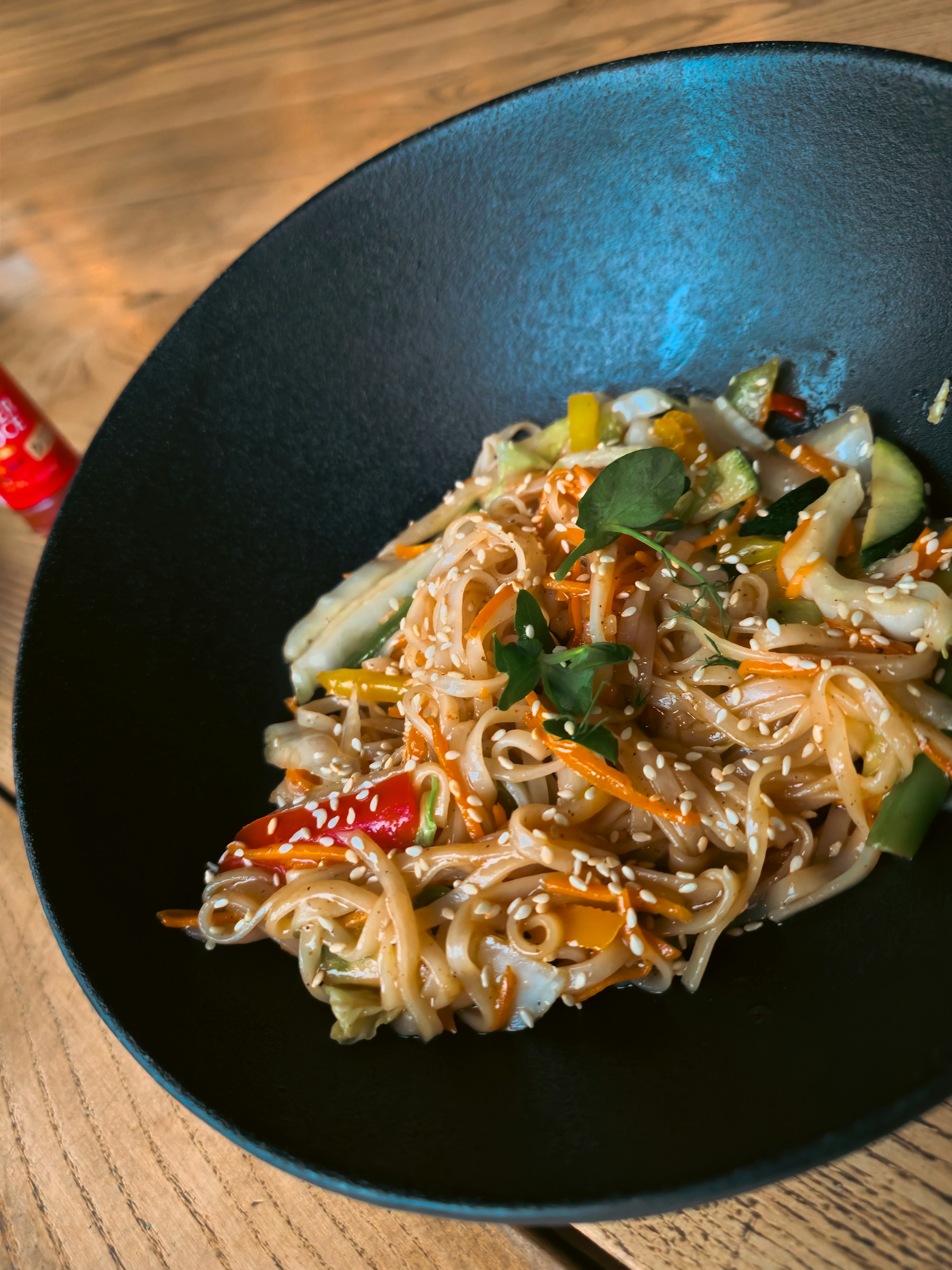
Somen are thin Japanese wheat noodles, and in Okinawa they are a weeknight stir-fry. Japan's agriculture ministry, in its register of regional dishes, describes stir-fried somen as an Okinawan home-style dish found all over the prefecture: thin wheat noodles tossed in a hot pan with vegetables, tuna or other additions, and a little salt and soy sauce. It notes that households kept somen in stock because it came in handy when typhoons hit and people could not leave the house. The ministry calls it sōmin tashiya, its Okinawan name; throughout Japan, as the Japan Times puts it, it is better known as sōmen champurū.
The name needs a small footnote. JLect, the Japonic languages database, defines chanpurū as a mixed Okinawan stir-fry of vegetables, tofu, and meat or fish, and says the word probably comes from the Indonesian or Malay campur, "mixed". The agriculture ministry is stricter. It says Okinawan cooking has two kinds of stir-fry, tashiya and chanpurū, and that chanpurū refers to stir-fried tofu, so using "somen chanpuru" to mean plain stir-fried somen is a misnomer. This version, with tofu, earns the name either way.
Tofu is our default, but it is not the only honest way to make the dish. The ministry's description includes tuna, and its recipe lists canned tuna, meat and fish cake as options. Luncheon meat, which Okinawans usually just call "pork", turns up in plenty of Okinawan stir-fries too. We give a tuna version alongside the tofu one and leave the luncheon meat out, for reasons the FAQ explains.
Because somen are so thin, they clump into a starchy mat if you overcook them, leave them wet or crowd them into a lukewarm pan. The method below is built to stop that, down to the splash of stock when they start to stick, which is exactly what the ministry's recipe does. Worked out from USDA FoodData Central values, one serving of four comes to about 400 calories, 18 g of protein, 7 g of fibre and 165 g of vegetables, with about 510 mg of sodium. As a main for two, double those figures.
Vegetables are the biggest part of the bowl. Each serving carries about 165 g of cabbage, carrot, red pepper, spring onion and greens, and a main portion for two about 330 g. A 2017 meta-analysis of prospective studies (Aune and colleagues, International Journal of Epidemiology) included 95 studies and found that each extra 200 g a day of fruit and vegetables combined was associated with 10% lower all-cause mortality (relative risk 0.90, 95% CI 0.87–0.93, from 15 studies) and 8% lower risk of cardiovascular disease (0.92, 0.90–0.95). Lower risk was seen up to about 800 g a day for every outcome except cancer, where it levelled off at about 600 g. These are observational studies, and people who eat a lot of vegetables tend to differ in other ways.
Cabbage and greens are among the standouts. In the same meta-analysis, cruciferous vegetables (the cabbage family) and green leafy vegetables were among the groups linked with lower risk of cardiovascular disease and all-cause mortality, and cruciferous and green-yellow vegetables were linked with lower total cancer risk. This dish has both: about 60 g of cabbage and 25 g of greens a serving. The analysis cannot show that any one vegetable is doing the work, so take this as a reason to be generous, not a promise.
It fits the traditional Okinawan pattern, with one honest exception. A widely cited review of the traditional Okinawan diet (Willcox and colleagues, Journal of the American College of Nutrition, 2009) describes it as low in calories yet nutritionally dense, heavy in vegetables and fruit, with a very high intake of orange-yellow root vegetables such as sweet potatoes and of green leafy vegetables, but reduced in meat, refined grains, saturated fat, sugar, salt and full-fat dairy. The Blue Zones organisation sums up the older Okinawans' meals as "stir-fried vegetables, sweet potatoes, and tofu". The vegetables and tofu here belong to that pattern. Somen does not: it is a refined wheat noodle, the kind of grain that review describes the traditional diet as reduced in. So this is an everyday Okinawan dish, not a portrait of how the oldest generation ate. To lean closer to that pattern, use less noodle and more vegetables.
The tofu: a good swap for meat, but don't expect miracles. In the Japan Public Health Center-based Prospective Study (Katagiri and colleagues, BMJ, 2020), 92,915 men and women aged 45 to 74 were followed for 14.8 years, during which 13,303 died. Neither total soy nor non-fermented soy foods such as tofu were significantly associated with all-cause mortality. Only fermented soy, natto and miso, was linked with lower risk: about 10% lower for the highest fifth of intake compared with the lowest (hazard ratio 0.90 in men, 0.89 in women), and the authors cautioned that this may partly reflect residual confounding. What tofu reliably brings is plant protein and, if it is calcium-set, calcium. By USDA values the 100 g of calcium-set firm tofu in each serving has about 200 mg of calcium. The NIH recommended amount is 1,000 mg a day for most adults, and 1,200 mg for women from 51 and everyone over 70. The NIH notes that tofu's calcium figures apply only to tofu made with a calcium salt, so check the label for calcium sulfate.
The Ingredients
- 400g (14 oz)firm or extra-firm tofu, one block, ideally calcium-set (check the label for calcium sulfate)
- Or 2 × 145g (5 oz) canslight tuna in water instead of the tofu, drained (about 220g, or 8 oz), no-salt-added if you can find it
- 200g (7 oz)dried somen noodles
- 250g (9 oz)green or pointed cabbage, about a quarter of a medium head
- 1 (about 100g / 3½ oz)large carrot
- 1 (about 150g / 5 oz)red pepper (bell pepper)
- 4 (about 60g / 2 oz)spring onions (scallions)
- 100g (3½ oz)leafy greens: spinach, komatsuna, pak choi or chard
- 2 tbsp (30ml)neutral oil, such as canola, divided
- 2 tsp (10ml)toasted sesame oil, divided
- 60ml (¼ cup)kombu stock (dashi) or water
- 1 tbsp (15ml)soy sauce, regular or low-sodium, plus more at the table if needed
- 1 tbsp (9g)toasted sesame seeds
- Black pepper. Optional: 2 eggs, beaten; a thumb of ginger, about 10g, cut into fine matchsticks.
- No kombu stock? Soak a 10cm (4 in) piece of kombu in 250ml (1 cup) of cold water in the fridge for a few hours or overnight, or simply use water.
How to Make It
Wrap the tofu in a clean tea towel, set a heavy pan on top and leave it for 15 minutes, then cut it into 2cm (¾ in) cubes and pat them dry. If you are using tuna instead, just drain it. Put a large pot of water on to boil, at least 2 litres (2 quarts), and do not salt it, because dried somen already contains salt. Cut the vegetables while you wait: the carrot into thin matchsticks, the cabbage into ribbons about 1cm (½ in) wide with the thick core sliced thinly, the pepper into thin strips, and the greens into rough 4cm (1½ in) pieces. Slice the spring onions, keeping the white parts apart from the green tops. Stir the soy sauce into the kombu stock in a cup and set a colander in the sink. Somen will not wait, so have everything within reach.
Heat a wok or your largest frying pan, at least 28cm (11 in) across, over a medium-high heat. Add 1 tbsp of the neutral oil and, when it shimmers, the tofu in a single layer. Leave it alone for 3–4 minutes, until it is deep golden underneath and releases easily, then turn and brown two or three more sides, 8–10 minutes in all. Tip the tofu onto a plate. If you are using tuna, skip this step and the oil that goes with it.
When the water is at a rolling boil, drop in the somen, fanning the bundles out as they go in, and stir straight away with chopsticks or tongs so the strands separate. Cook them for a little less than the packet says, usually 1–1½ minutes. Taste a strand: it should be just tender with a little bite left at the centre. It will finish cooking in the pan.
Pour the noodles into the colander and run cold water over them straight away. Rub them gently between your hands under the tap for 30 seconds or so, until they feel cold and no longer slippery and the water runs clear. This washes off the surface starch that turns somen into glue, and stops the cooking. Shake the colander hard and let the noodles drain for a minute, then toss them with 1 tsp of the sesame oil so the strands stay separate. Rinsed and oiled, they will happily wait 20 minutes.
Wipe out the pan if needed, set it over a high heat and add the remaining 1 tbsp of neutral oil. When it shimmers, add the carrot, the cabbage core and the white parts of the spring onions, with the ginger if using, and stir-fry for 1 minute. Add the cabbage leaves and pepper and keep tossing for 2 minutes more, until the cabbage has wilted at the edges but still has crunch. If your pan is smaller than 28cm (11 in), cook the vegetables in two batches; a crowded pan steams them instead of searing.
Add the noodles to the pan and toss everything together with tongs or long chopsticks, lifting and separating the strands rather than stirring, for 2–3 minutes, until the noodles are hot through and a few are lightly toasted. If they start to stick or catch, splash in a tablespoon or two of the stock mixture and keep tossing. Keep the heat high the whole time.
Pour the rest of the stock and soy sauce around the edge of the pan, so it sizzles before it reaches the noodles, then add the greens and the tofu (or flake in the tuna) and toss for about 1 minute, until the greens have just wilted. For the egg version, push everything to one side, pour the beaten eggs into the space, let them set for 20 seconds, then scramble lightly and fold them through.
Take the pan off the heat. Drizzle over the remaining 1 tsp of sesame oil, scatter over the spring onion tops, the sesame seeds and plenty of black pepper, and toss once more. Taste before you reach for more soy sauce; it may well not need it. Serve straight away, while the noodles are springy.
If It Goes Wrong
- The noodles have set into one clump. Run them under cold water again, work the clump apart gently with your fingers, drain well and add a few more drops of oil. Next time, take them out sooner and rinse longer.
- They are sticking to the pan. The pan was not hot enough, or the noodles went in wet. Splash in a tablespoon of stock, keep the heat high and keep lifting and tossing rather than stirring. A non-stick pan or a well-seasoned wok helps.
- The vegetables are watery and limp. The pan was overloaded. Cook them in two batches.
- It is too salty. The noodles were probably boiled in salted water or not rinsed. Toss in more cabbage or greens to stretch it, and next time leave the water unsalted.
Make It With What's in the Fridge
Keep the method and the noodles; change almost everything else. As a guide, aim for about three times as much vegetable as dry noodles by weight: this recipe uses 660 g of vegetables to 200 g of somen. Cut everything thin, put the firmest things in first and add leafy things last.
- Instead of cabbage: Chinese leaf (napa cabbage), pak choi, or a handful of bean sprouts tossed in for the last 30 seconds.
- Instead of carrot or pepper: courgette (zucchini), thinly sliced broccoli stems, mangetout or mushrooms.
- For the greens: spinach, komatsuna, chard, watercress, or finely shredded kale. Kale is tougher, so add it with the cabbage.
- For the protein: tofu, canned tuna, eggs, leftover cooked chicken or pork, or a handful of shelled edamame.
- For the noodles: hiyamugi, which are slightly thicker, cook the same way. Thin spaghetti or angel hair pasta will do in a pinch. Cook it until just tender, and rinse and oil it in the same way.
Questions People Ask
Yes. Japan’s agriculture ministry lists stir-fried somen as an Okinawan home-style dish found all over the prefecture, eaten for lunch, dinner or as a snack with a drink, and notes that families kept somen on hand for meals when typhoons hit and nobody could leave the house. The ministry calls it sōmin tashiya. It also explains that Okinawan cooking has two kinds of stir-fry, tashiya and chanpuru, and that chanpuru refers to stir-fried tofu, so calling plain stir-fried somen “somen chanpuru” is a misnomer; this version, with tofu, earns the name. It is an everyday Okinawan dish, not a longevity secret. The vegetables and tofu fit the traditional Okinawan pattern; the wheat noodles are a refined grain, which that traditional diet was light on.
Four things. Cook it barely, a little less than the packet says, in plenty of unsalted boiling water. Rinse it hard under cold running water until it no longer feels slippery, which washes off the surface starch and stops the cooking. Drain it well and toss it with a little oil so the strands stay apart. Then stir-fry it fast over a high heat, in a pan big enough not to be crowded, tossing and lifting rather than stirring, and splash in a little stock if it starts to stick.
Dried somen is salty: USDA puts it at 1,840 mg of sodium per 100 g. Much of that goes into the cooking water. Comparing USDA’s figures for dry and cooked somen, the cooked noodles keep only about a quarter of it (Japan’s food tables suggest even less, about a sixth), so boil them in plenty of water and rinse them well. With 1 tablespoon of regular soy sauce, a serving comes to about 510 mg of sodium by USDA values, around 22% of the 2,300 mg Daily Value; the FDA counts 20% or more in a serving as high. Low-sodium soy sauce brings it to about 435 mg, and using half the soy sauce to about 400 mg. Make up the flavour with ginger, black pepper and more spring onion. Instant dashi granules usually contain salt and are often made with bonito, which is fish, so use homemade kombu stock or water, or check the label. If you have been told to watch your sodium or blood pressure, talk to your doctor about how dishes like this fit in.
Tuna, yes: the agriculture ministry’s description of the dish includes tuna, and its recipe suggests canned tuna as an addition. Use two 145 g (5 oz) cans of light tuna in water, drained, skip browning the tofu and the oil that goes with it, and flake the tuna in at the end. By USDA values, that version comes to about 340 calories, 19 g of protein and 8 g of fat a serving, but sodium rises to about 630 mg, so look for no-salt-added tuna. Luncheon meat, which Okinawans usually just call “pork”, turns up in many Okinawan stir-fries, and the ministry’s recipe lists meat among its options. It is a processed meat and brings plenty of salt, so we leave it out; if you use it, cut back the soy sauce.
It is best straight from the pan, while the noodles are springy. Leftovers keep for up to 2 days in the fridge. The noodles soak up moisture and soften as they sit, so reheat them in a hot pan with a splash of stock or water rather than in the microwave. You can rinse, drain and oil the noodles and cut the vegetables up to a few hours ahead; then the cooking takes about 15 minutes, or under 10 with tuna.
Sources
- Ministry of Agriculture, Forestry and Fisheries of Japan. Our Regional Cuisines: Soomintashiya (Okinawa). maff.go.jp
- JLect: Japonic Languages and Dialects Database. ちゃんぷるー (chanpuruu). jlect.com
- The Japan Times. Sōmen champurū recipe feature, Life: Food & Drink, 31 August 2025. japantimes.co.jp
- Takiguchi T. SPAM on Okinawa: Canned pork big part of island’s culture, cuisine. Stars and Stripes Okinawa, 9 May 2026. okinawa.stripes.com
- Blue Zones. Okinawa, Japan. bluezones.com
- Willcox DC, Willcox BJ, Todoriki H, Suzuki M. The Okinawan diet: health implications of a low-calorie, nutrient-dense, antioxidant-rich dietary pattern low in glycemic load. J Am Coll Nutr. 2009;28(sup4):500S–516S. Article
- Aune D, Giovannucci E, Boffetta P, et al. Fruit and vegetable intake and the risk of cardiovascular disease, total cancer and all-cause mortality: a systematic review and dose-response meta-analysis of prospective studies. Int J Epidemiol. 2017;46(3):1029–1056. Full text
- Katagiri R, Sawada N, Goto A, et al. Association of soy and fermented soy product intake with total and cause specific mortality: prospective cohort study. BMJ. 2020;368:m34. Full text
- NIH Office of Dietary Supplements. Calcium: Fact Sheet for Health Professionals. ods.od.nih.gov
- US Food and Drug Administration. Sodium in Your Diet. fda.gov
- Ministry of Education, Culture, Sports, Science and Technology (MEXT), Japan. Standard Tables of Food Composition in Japan (8th revised edition): Somen and hiyamugi, dried (01043) and boiled (01044); Kombu dashi, cold-brewed (17020). Dried · Boiled · Kombu dashi
- USDA FoodData Central, SR Legacy: Noodles, japanese, somen, dry (FDC 168908); Noodles, japanese, somen, cooked (FDC 168909); Tofu, firm, prepared with calcium sulfate and magnesium chloride (nigari) (FDC 172448); Fish, tuna, light, canned in water, drained solids (FDC 173709); Cabbage, raw (FDC 169975); Carrots, raw (FDC 170393); Peppers, sweet, red, raw (FDC 170108); Onions, spring or scallions (includes tops and bulb), raw (FDC 170005); Spinach, raw (FDC 168462); Oil, canola (FDC 172336); Oil, sesame, salad or cooking (FDC 171016); Seeds, sesame seeds, whole, dried (FDC 170150); Soy sauce made from soy and wheat (shoyu) (FDC 174277); Soy sauce made from soy and wheat (shoyu), low sodium (FDC 172473); Egg, whole, raw, fresh (FDC 171287). fdc.nal.usda.gov